
Unemployment in India: The Silent Crisis of a Young Nation
Siddharth Saswat Panda

India is often described as the land of youth, dreams, and opportunities. With more than half of its population below the age of thirty, the nation possesses one of the largest workforces in the world. From the crowded streets of metropolitan cities to the remote villages hidden among hills and forests, millions of young Indians wake up every morning carrying ambitions in their hearts and degrees in their hands. Yet, behind the glittering image of economic growth and digital progress lies a painful reality : unemployment.
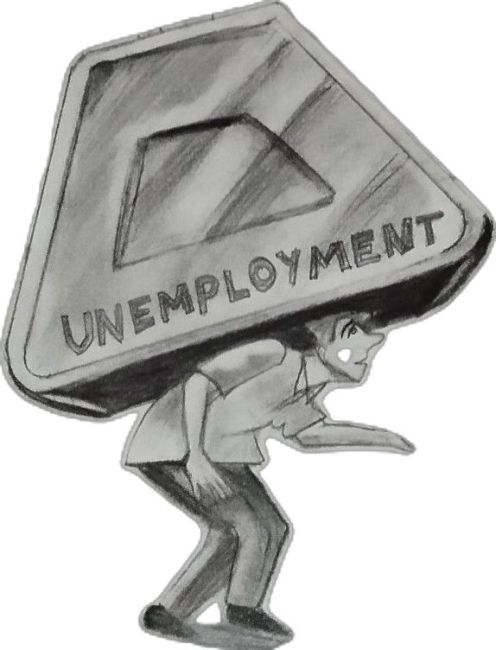
Unemployment in India is not merely an economic issue; it is a social, emotional, and moral crisis that silently affects millions of lives. It steals confidence from educated youth, weakens families, increases inequality, and creates frustration in society. The dreams of countless young men and women often collapse under the burden of limited opportunities and an unstable job market.
The Growing Problem
India produces lakhs of graduates every year. Universities, colleges, and technical institutions continue to expand, offering education to millions. However, education alone has not guaranteed employment. A large number of educated youths wander from office to office carrying resumes, appearing for examinations, and waiting endlessly for opportunities that rarely arrive.
In villages, unemployment appears in the form of underemployment. Farmers work only during certain seasons, while many rural laborers remain without work for months. In cities, educated youth often accept low-paying jobs unrelated to their qualifications merely to survive. Engineers become delivery workers, postgraduates prepare endlessly for government exams, and skilled workers migrate from one city to another searching for stability.
The irony of modern India is heartbreaking while industries seek skilled workers, millions of educated youths remain unemployed because the education system often fails to provide practical skills required in the real world.
Causes of Unemployment
1. Population Explosion
India’s rapidly growing population has increased pressure on the job market. Every year, millions enter the workforce, but employment opportunities do not grow at the same pace. The imbalance between demand and availability creates intense competition even for small jobs.
2. Faulty Education System
The traditional education system focuses heavily on theoretical knowledge rather than practical learning. Many students complete degrees without gaining technical, professional, or communication skills. As a result, industries hesitate to recruit fresh graduates who lack real-world experience.
3. Lack of Industrial Growth
Although India has developed in sectors like information technology and services, industrial growth remains uneven. Manufacturing industries capable of employing large populations have not expanded sufficiently in many regions. Rural and backward areas especially suffer from lack of industries and investment.
4. Dependence on Government Jobs
A large section of Indian youth depends heavily on government jobs because they provide security, respect, and stable income. However, the number of vacancies is extremely limited compared to the number of applicants. Sometimes millions compete for a few thousand posts.
5. Corruption and Nepotism
Corruption and favoritism in recruitment processes discourage deserving candidates. Many talented youths feel helpless when opportunities appear influenced by money, political connections, or unfair practices.
6. Technological Changes
Automation and artificial intelligence are transforming industries rapidly. Machines now perform tasks once done by humans. While technology increases efficiency, it also reduces demand for certain traditional jobs.
The Human Side of Unemployment
Statistics can never fully express the pain of unemployment. Behind every number stands a human story a father unable to support his family, a mother sacrificing her dreams for her children, or a young graduate losing confidence after repeated failures.
Unemployment creates psychological pressure. Anxiety, depression, frustration, and hopelessness become common among jobless youth. Many students spend years preparing for competitive examinations, often facing repeated disappointments. Society too adds pressure by measuring success only through employment and income.
In many cases, unemployment also increases social problems such as crime, substance abuse, migration, and family conflicts. When educated youth lose faith in the system, the nation itself suffers.
Rural Unemployment: The Forgotten Reality
The villages of India carry a different but equally painful form of unemployment. Agriculture still supports a major population, yet farming income remains uncertain due to irregular rainfall, lack of irrigation, rising costs, and market instability.
Many rural youths migrate to cities in search of work. They often end up in overcrowded slums, working in insecure and low-paying jobs. The migration weakens village economies and increases pressure on urban infrastructure.
Programs like rural employment schemes have provided temporary relief, but long-term development requires better industries, education, healthcare, and infrastructure in rural India.
Women and Unemployment
Women face additional barriers in employment. Despite educational achievements, many women remain outside the workforce because of social restrictions, safety concerns, unequal wages, and lack of opportunities. In many regions, talented women are forced to abandon careers after marriage or due to family responsibilities.
Empowering women through education, safety, entrepreneurship, and equal opportunities can significantly strengthen India’s economy and social progress.
The Need for Skill Development
India’s future depends greatly on skill-based education. The nation must move beyond rote learning and focus on practical knowledge, innovation, entrepreneurship, digital literacy, and vocational training.
Young people should be encouraged not only to seek jobs but also to create jobs. Startups, small businesses, local industries, handicrafts, and technological innovation can generate employment on a large scale if properly supported.
Government and Society’s Responsibility
The battle against unemployment cannot be fought by the government alone. Educational institutions, industries, social organizations, and citizens must work together.
India needs:
Better industrial policies
Strong vocational education
Transparent recruitment systems
Support for startups and small businesses
Rural development programs
Investment in agriculture and manufacturing
Career guidance for youth
Equal employment opportunities for women
Most importantly, society must respect all forms of honest work. Dignity of labor should become a national value.
Conclusion
Unemployment in India is more than an economic challenge; it is a test of the nation’s conscience. A country blessed with youthful energy cannot afford to let its dreams fade into frustration. Every unemployed youth represents untapped talent, hidden creativity, and lost potential.
India’s true strength does not lie only in its growing economy or technological achievements, but in its ability to provide dignity, opportunity, and hope to its people. The youth of India do not seek charity \ they seek a chance. A chance to work, to contribute, and to build a better future for themselves and the nation.
If India can transform its unemployed population into a skilled and productive force, the country will not merely become an economic power; it will become a symbol of human progress and social justice for the entire world.
ANYRESESENTMENT LEGAL CHALLANGESS ODISHABARTA NOT ACCOUNTABLE,NOT BOUND TO EXPLAN
Junagad, Kalahandi
Cont :- +91 8926297029
Gmail : [email protected]