
Similipal at a Crossroads: Eco-Tourism not at the cost of nature
Dr. Manas Ranjan Senapati
Environmentalist
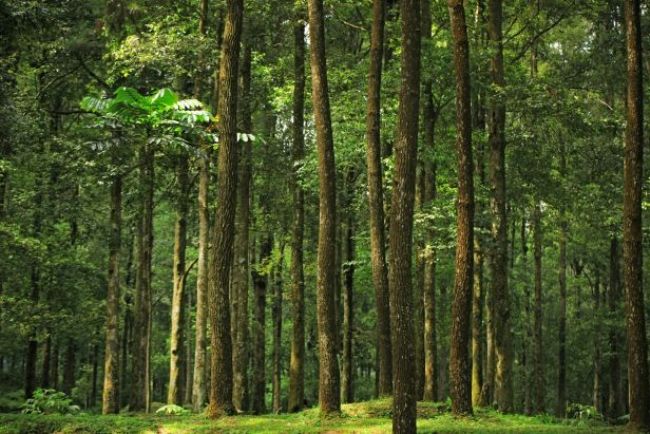
The forests of Similipal Biosphere Reserve are not just a stretch of green on the map—they are a living, breathing ecological treasure. Home to dense sal forests, cascading waterfalls, rich biodiversity, and indigenous communities, Similipal represents one of India’s most significant forest ecosystems. Yet, its history reflects an ongoing tension between development ambitions and ecological preservation.
The Government of Odisha declared Simlipal as a wildlife sanctuary in 1979 with an area of 2,200 square kilometres. Government of India declared Similipal as a biosphere reserve in 1994. UNESCO added this national park to its list of Biosphere Reserves in May 2009. In the year 1979, the establishment of the Similipal Forest Development Corporation marked a turning point. The corporation decided to cut down diseased and old trees and sell them. With that money, Similipal would be developed. There was strong opposition to this. After years of struggle, the Odisha Environmental Society finally succeeded, the cutting of trees stopped, the corporation became inactive, and Similipal was recognized as a protected biosphere.
A temporary moratorium was also imposed on the cutting of trees on the recommendation of the Vidhan Sabha House Committee. Forests like Similipal are not timber reserves—they are intricate ecological networks where even decaying trees play critical roles in nutrient cycling, habitat formation, and biodiversity support.
The proposal did not go unchallenged. Environmentalists, local communities, and conservationists raised strong objections. Among them, the Odisha Environment Society played a pivotal role in mobilizing awareness and resistance.
Their argument was clear: economic development cannot come at the cost of irreversible ecological damage. Similipal was too valuable—not just for Odisha, but for the country and the planet.
After years of sustained effort, public pressure began to yield results. The large-scale cutting of trees was halted, and the corporation gradually became inactive. A temporary moratorium on tree felling was also imposed following recommendations by a Vidhan Sabha House Committee—an important example of democratic institutions responding to environmental concerns.
The struggle ultimately led to a significant milestone: Similipal’s recognition as a biosphere reserve. Today, it is formally known as the Similipal Tiger Reserve and is part of India’s network of protected areas. This designation acknowledges its ecological importance and provides a framework for conservation and sustainable use.
But unfortunately now again there is a proposal for eco-tourism infrastructure by government brings back familiar questions in a different form. Demarcation of twenty acres of land for this project would loss thousands of Sal trees has certainly raised the eyebrows of local communities and environmentalists.
Eco-tourism, when done right, can support conservation by generating awareness and livelihoods. However, poorly planned projects—especially those involving the cutting of thousands of trees—risk repeating the mistakes of the past.
Similipal’s story offers a powerful lesson: once lost, natural ecosystems are nearly impossible to restore. The earlier movement against deforestation was not just about saving trees—it was about safeguarding ecological balance, cultural heritage, and future sustainability. Any new development plan must be evaluated through a rigorous environmental lens with a proper assessment. Transparent impact assessments, stakeholder consultations, and adherence to conservation laws are non-negotiable
Similipal stands today because people chose to protect it. The question now is whether we will honor that legacy or repeat history under new terminology. Development and conservation need not be opposing forces—but achieving that balance requires integrity, science, and long-term vision. Similipal does not need transformation; it needs protection, respect, and thoughtful stewardship.