
Five-Tonne Adulteration Racket Exposed in Brahmapur: Arrest Raises Bigger Questions Over Food Safety Enforcement

Manoj Kanta Dash,Odishabarta
Probation IPS:-
;According to the alleged sequence of events, the illegal manufacturer reportedly planned to pay a bribe of several lakhs of rupees to the newly posted IIC. The amount was allegedly fixed in advance, with the date and time of delivery also decided. As scheduled, the man arrived with bundles of cash and placed the money on the table to offer it to the officer. However, a Vigilance team, which was reportedly waiting outside, moved in, seized the alleged bribe money and arrested the accused. The episode raises serious questions about how illegal manufacturing activities could continue unchecked and whether effective preventive action had been taken earlier by the probationary IPS officer and the concerned IIC. These allegations, however, need to be assessed against the official Vigilance findings and investigation records.
Brahmapur, October 12, 2026: Another major food-adulteration racket has been exposed in Brahmapur, with Badabazar Police arresting the alleged mastermind of an illegal spice-processing operation and seizing more than five tonnes of suspected adulterated food products and related materials.
The crackdown has once again brought the spotlight on the persistent threat of adulterated food products and the effectiveness of regulatory surveillance in the city’s wholesale markets.
The seizure is significant, but it also raises a larger public-interest question: Will the latest arrest dismantle the alleged operation, or will the business continue through other channels unless the entire supply chain is investigated?
The police action took place on October 11 at a processing unit in Laxminrusingha Sahi, 7th Lane Extension, Brahmapur. A special team led by Badabazar Police Inspector-in-Charge Asish Kumar Swain conducted the raid following intelligence inputs.
An Illegal Processing Unit Operating on a Commercial Scale
According to the police, the unit was allegedly manufacturing adulterated turmeric and chilli powder by mixing the products with prohibited synthetic colouring agents. The materials were reportedly processed using milling machines, packed in bulk bags weighing 30 kg, 40 kg and 50 kg, and subsequently repackaged into smaller packets for distribution in Brahmapur and adjoining areas.
The scale of the operation, the reported use of prohibited colouring agents and the availability of industrial processing and packing equipment point to an organised commercial activity rather than a small-scale domestic operation, according to the allegations under investigation.
If laboratory tests confirm the suspected adulteration, the case will raise serious concerns about the potential exposure of unsuspecting consumers to unsafe food products.
Five Tonnes Seized: The Investigation Must Go Beyond the Factory
During the raid, police seized approximately 1,500 kg of loose turmeric powder, packaged turmeric and chilli powder, 20 packets of colouring agents weighing 500 grams each, a drum containing around 40 kg of loose colouring material, eight milling machines and a weighing machine.
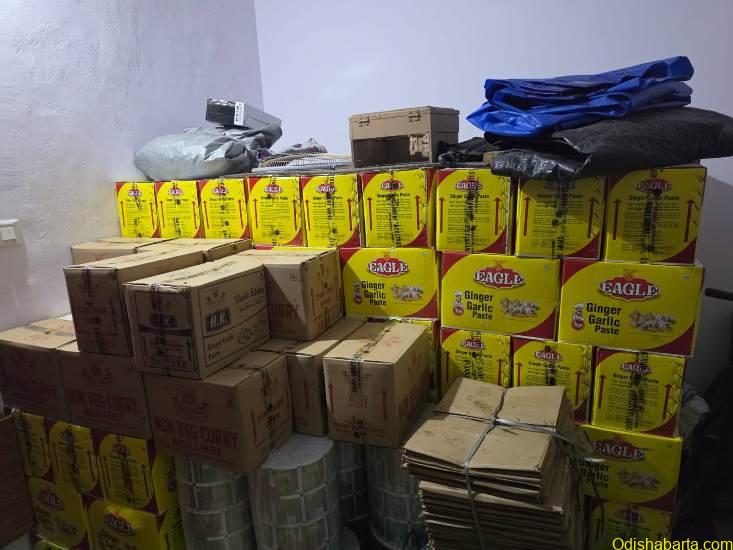
A further seizure was made at the godown of M/s Shiny Industries. According to the police account, the materials included 216 packets of Eagle-branded ginger-garlic paste weighing 1,728 kg, approximately 2,400 kg of turmeric, 1,720 kg of chilli powder stored in jerry bags and six manually operated packing machines.
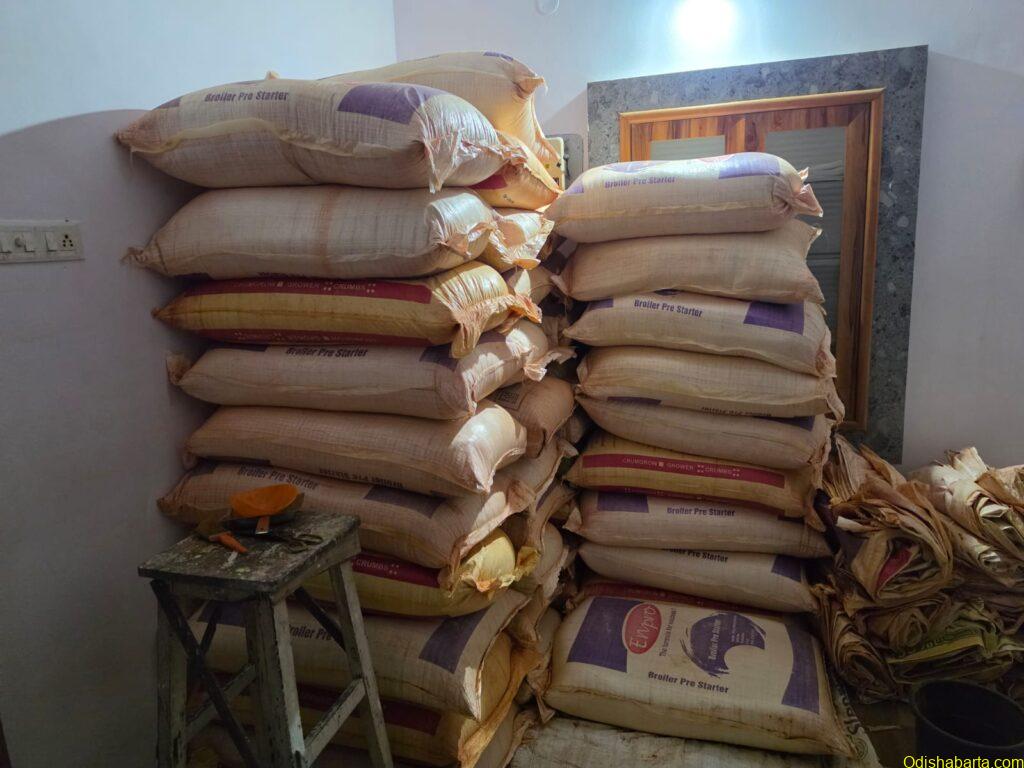
Police have put the overall seizure at more than five tonnes of suspected adulterated food products and related materials. Samples have been sent for laboratory examination. The final findings on adulteration and food safety must await the test reports.
The crucial question now is whether investigators will trace the origin of the raw materials and colouring agents, identify the manufacturers and suppliers involved, establish where the finished products were distributed, and determine whether any other businesses or individuals were connected with the operation.
Badabazar’s Food-Safety Challenge Cannot End With One Arrest
Badabazar is a major commercial area of Brahmapur, where consumers and traders depend on the safety and quality of food products moving through wholesale and retail channels.
The latest case renews concerns about the need for sustained inspections of food-processing units, godowns, repackaging facilities and distribution networks.
The issue is not confined to turmeric and chilli powder. Food products such as edible oils, ghee, flour and other commonly consumed goods also require effective quality checks, traceability and strict compliance with food-safety standards. Any allegations concerning particular products or traders, however, must be established through evidence rather than assumption.
Repeated raids and large seizures can expose illegal activities, but their long-term impact depends on what follows: laboratory confirmation, identification of the full network, prosecution supported by evidence, and regular preventive inspections.
A police raid is an enforcement action; lasting consumer protection requires a system that prevents unsafe products from reaching the market in the first place.
Arrest Is Only the Beginning
The alleged mastermind was arrested and forwarded to court on October 12. Police have also identified three other persons reportedly associated with the unit and are examining their roles.
Badabazar Police registered the case as Badabazar PS Case No. 775, dated October 11, 2026, under Sections 318(2), 274, 275 and 61(2)(a) of the Bharatiya Nyaya Sanhita, along with the relevant provisions cited in the police records concerning food adulteration and food safety.
The investigation is continuing to establish the source of the ingredients, the distribution network and the possible involvement of other persons or business entities.
The arrest must not be confused with a finding of guilt. The allegations against the accused will be subject to the legal process, while the laboratory results will be central to determining the nature of the seized products.
Questions the Authorities Must Answer
The latest seizure demands more than a case-file update. Food-safety authorities and the police need to establish whether the products had already entered the consumer market, whether affected consignments can be traced and withdrawn, and whether inspections of similar processing and repackaging units are being conducted.
The Food Safety and Standards Authority’s enforcement machinery, local food-safety officials and the police must ensure that the investigation follows the evidence from the processing unit to the final point of sale.
For consumers, the decisive outcome will not be the number of machines seized or the quantity displayed in a raid report. It will be whether unsafe products are kept off the shelves, the entire alleged network is identified, and effective legal action follows where the evidence warrants it.
Brahmapur has witnessed another major seizure. The real test for the authorities is whether this operation produces lasting deterrence—or becomes another isolated crackdown followed by business as usual.