Echoes from the Hills: Life and Lore of the Kandha Tribe of Kalahandi
By;SiddhartthSaswat Panda
Kalahandi, a scenic region of Odisha, emerged as a district after the integration of the erstwhile princely states into the Indian Union. Geographically, it extends from 19°3′ North to 21°5′ North latitude and from 82°20′ East to 83°47′ East longitude. The district is flanked by Kandhamal and Rayagada on the eastern side, while Nabarangpur district of Odisha and the state of Chhattisgarh lie towards the west. To its north are Nuapada and Balangir districts, whereas the southern boundary is again shared with Nabarangpur.
The district covers a geographical expanse of about 8,197 square kilometres and, according to the Census of 2001, had a total population of 13,35,494.
Kalahandi is predominantly a tribal inhabited district where numerous indigenous communities reside. Among the principal tribes found in the region are the Banjara, Bhatra, Bhunjia, Binjhal, Dal, Gond, Kandha, Mirdha, Munda, Paraja, Saora and Savar. The district has a remarkably high Scheduled Tribe concentration, with tribal communities constituting a substantial segment of its demographic composition. According to population strength, the Gonds occupy the foremost position among the tribal groups, while the Kandhas stand second in numerical prominence within the district. As recorded in the 1991 Census, the Kandha population in Kalahandi was 1,46,225.
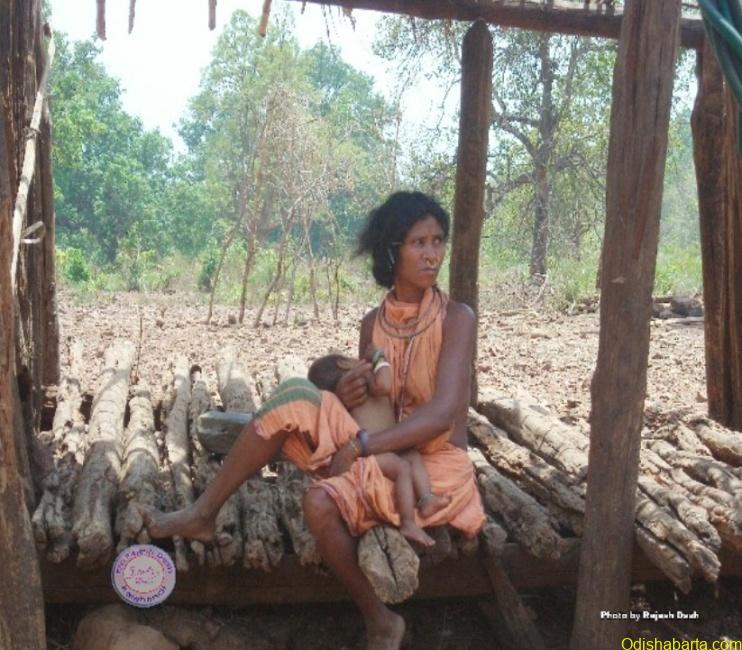
The Kandha population of Kalahandi district is broadly represented by three major sub-tribal sections, namely the KutiaKandha, DongariaKandha and DesiaKandha. These communities are chiefly distributed in the blocks of Bhawanipatna, Junagarh, Koksara, Kalampur, Jayapatna, Thuamul-Rampur, Lanjigarh and Madanpur-Rampur. The Kandhas traditionally regard themselves as the earliest inhabitants of the district and claim ancestral ownership over much of its land in former times. Owing to this association, the region is believed to have once been known as Kandhan or Kandhan Des, signifying the land of the Kandhas.
A considerable number of internal divisions are also noticed among the Kandha community of Kalahandi. Dr. Krishan Sharma has identified Dangaria, Kuvi, Kuttia, Languli, Penga and Jharania as the prominent sub-groups prevailing in the district (Sharma, 1979:17). Other scholars, however, have offered varying classifications regarding the segmentation of the Kandhas. Some have divided them into Desia or KachhariaKandha, Kutia/KotiaKandha and DangriaKandha; while others mention Dongaria, Kuvi, Kutia, Languli, Penga and Jharania as distinct branches. Another scholarly categorisation includes Dangria, Jangalia, Nanglya, Pataria, Des Kandha, Jharia and Maria. Yet another view recognises Kutia, Dangaria, Jharania, Desia, DesaKandha, Dal Kandha and Maral as important constituent sub-groups of the Kandha tribe.
Dal Kandha, KandhaParaja, Maral, SuliaKandha and several other minor sub-divisions of the Kandha tribe are likewise found inhabiting this region. Anthropological studies have generally classified the Kandhas under the Proto-Australoid racial stock, a category widely used in the physical anthropology of Indian tribal populations. Dr. Krishna Sharma, however, on the basis of his field investigation in Kalahandi, observed that the Kondhs conform to B. S. Guha’s Proto-Australoid type but exhibit a noticeable admixture of Mongoloid elements (Sharma, 1979:103).
The Kandha social structure is organised into a large number of clans and lineage divisions. Among them, seven principal clan groups, locally known as Barga, are regarded as the major divisions. These are Tupa, Luha, Budka, Gaanka, Sika, Badbudka and Uchharia. From these seven primary Bargas, more than one hundred subsidiary clan branches are said to have evolved (Mishra, 1992:73).
Dr. Dol Govinda Bisi, a distinguished author on tribal society, has furnished a more elaborate enumeration of Kandha clan divisions. According to him, the community comprises Charmilikya, Kudurkya, Balaringya, Turkya, Baramilkya, Kurmilkya, Sika, Beska, Dehelia, Chimabiria, Mutkya, Satmilikya, Sarmunya, Kurkya, Dal, Kamangya, Bachha, Uchrya, Ghusurya, Desghriya, Chimkya, Tupa, Bubrya, Dhumnia, Sangu, Lua, Kungibadka, Kanbiria and several other clan segments (Bisi, 1990:65).
The Kandhas possess a highly diversified clan organisation with numerous lineage branches within the community. Broadly, seven major clan divisions, popularly termed as Barga, are recognised among them, namely Tupa, Luha, Budka, Gaanka, Sika, Badbudka and Uchharia. It is stated that more than a hundred minor clan segments have subsequently branched out from these seven principal divisions (Mishra, 1992:73).
Dr. Dol Govinda Bisi, an eminent author on tribal studies, has presented an even wider classification of the Kandha clans. In his view, the Kandha community includes Charmilikya, Kudurkya, Balaringya, Turkya, Baramilkya, Kurmilkya, Sika, Beska, Dehelia, Chimabiria, Mutkya, Satmilikya, Sarmunya, Kurkya, Dal, Kamangya, Bachha, Uchrya, Ghusurya, Desghriya, Chimkya, Tupa, Bubrya, Dhumnia, Sangu, Lua, Kungibadka, Kanbiria and many other clan divisions (Bisi, 1990:65).
Kui constitutes the mother tongue of the Kandha community and belongs to the Central Dravidian group of languages. Traditionally, it has continued largely as an oral language without an established written convention in common social use. Although as many as four separate scripts have reportedly been devised by Sri Dayanidhi Mallik, Sri Dinabandhu Kanhar, Biswanath Pradhan of Kandhamal district and the late DasuramMaleka of R. Udayagiri area in Gajapati district, none of these scripts has gained wider acceptance within Kandha society for the regular transcription of the language. In earlier times, Christian missionaries prepared a few primers and religious texts in Kui employing Roman as well as Odia scripts. Even at present, certain literary works in Kui written through Odia script have been brought out by missionary organisations, the Academy of Tribal Language and Culture, and some individual Kandha authors. A large section of the Kandha population is bilingual, possessing working knowledge of both Kui and Odia. In certain localities, however, the gradual decline of Kui has led many Kandhas to converse predominantly in Odia. The Kui speech prevalent in Kalahandi is also said to bear linguistic similarity with the language spoken by the Dom community.
In matters of family organisation, the Kandhas generally follow the nuclear household pattern. After marriage, a son is expected to establish a separate dwelling and maintain an independent domestic unit apart from his parents. The privilege of continuing in the ancestral house is customarily reserved for the youngest son. This social practice continues to remain operative in Kandha society even today. Elderly parents occupy an honoured position within the family and are accorded due respect. The Kandha family system is patriarchal in nature, wherein the father enjoys the principal authority in household affairs, followed by the mother who occupies the next important place in the familial hierarchy.
Among the Kandhas, economic and domestic activities are performed jointly by both men and women, though a clear division of labour is traditionally maintained. Men are generally entrusted with outdoor and physically demanding occupations such as cultivation, clearing forests, preparing agricultural land, ploughing fields, constructing or repairing houses, thatching roofs, maintaining monetary accounts and ensuring the general welfare of the household. Women, on the other hand, shoulder most of the indoor and routine domestic responsibilities. Their duties include cooking, fetching water and firewood, serving meals to family members, washing utensils and clothes, cleaning the courtyard and cattle shed, plastering floors and walls with mud, transplanting seedlings, harvesting ripe crops and several other household tasks. In addition to these, women also bear the responsibility of caring for children as well as aged parents. For this reason, while selecting a bride for a Kandhaयुवक, parents usually prefer a girl who is not only physically attractive but also industrious and efficient in household work.
Traditionally, every Kandha village maintained separate youth dormitories known as DhangaraBasa for unmarried boys and DhangiriBasa for unmarried girls. The unmarried youths spent their nights in the DhangaraBasa, while the girls assembled in the DhangiriBasa. During the night, young men from neighbouring villages visited the girls’ dormitory carrying small presents for the maidens. In return, the girls welcomed them with country cigars, food and local drinks. Thereafter both groups participated in songs and dances, the girls dancing while the boys accompanied with musical instruments and responsive singing. It was, however, a strict custom that a girl would not dance with the youths of her own village, as they were socially regarded as brothers or uncles. Owing to the growing influence of modern civilisation, this institution has almost disappeared today except in some remote and inaccessible areas.
It was often through this Dhangiri dance that a Kandha youth selected his future bride. Information regarding such mutual liking was conveyed to the boy’s parents through friends or companions. After becoming aware of the choice, the boy’s father deputed the Disari (village priest/diviner) to initiate formal negotiations. In certain areas, members of the Dom community were also sent as mediators to the house of the prospective bride. If the bride’s father showed willingness, the groom’s father, accompanied by some relatives, visited the bride’s residence after a few days and formally placed the marriage proposal before her family.
Before undertaking this formal visit, a customary omen test was performed in the groom’s house to determine whether the proposed bride would prove auspicious or inauspicious for the family. In this ritual, a handful of rice was cooked in a new earthen pot over a burning hearth. If the boiling rice overflowed and fell upon the ground, the girl was considered ill-omened and the marriage negotiations were immediately abandoned (Nepak, 1977:223; Dash, 1983:13).
Once the groom’s party reached the bride’s house and the proposal was accepted by her father, discussions were held regarding the amount of bride price. This payment usually consisted of cash, ornaments and buffaloes. Generally, an amount ranging from Rs.100 to Rs.1000 and from one pair to ten pairs of buffaloes was fixed as the customary bride price. In cases where the groom’s family was unable to provide the required payment, the groom had to serve and work in the house of his prospective father-in-law until the obligation was fulfilled. Thereafter the marriage date was finalised (Senapati, 1980:97).
Among the Kandhas, the months of Margasir, Pausa, Magha and Baisakh are considered especially auspicious for the celebration of marriage. Consequently, after the settlement of bride price, a suitable day within one of these sacred months is selected for the solemnisation of the union.
On the appointed date, the groom along with his relatives and companions proceeds to the bride’s house with music and festive instruments in order to bring the bride to his own village, since the actual marriage ceremony is generally performed at the groom’s residence. The bride’s father receives the visiting party with a feast accompanied by liquor. After this hospitality, the groom’s party starts back with the bride, followed by her friends, relatives and several villagers. During the return journey, a symbolic mock fight takes place between the two groups, as the bride’s party theatrically attempts to reclaim the bride. Eventually, however, the groom’s side emerges victorious in the playful contest, and both parties continue towards the groom’s village amidst rejoicing, dance and the beating of musical instruments.
At the moment of departure from her parental home, the bride moves emotionally to her father, mother, close relatives and even to the households of the village, embracing them and weeping as a mark of separation. During this farewell ritual, the bride’s father ties flowers, fruits or grains to one end of the saree worn by the bride in accordance with the customary tradition of his sept. This rite is locally known as Kani China. The observance of this custom is socially obligatory, and failure to perform it invites penalty upon the bride’s father from the community council (Bisi, 1990:76).
The marriage ceremony is finally solemnised at the groom’s residence by the village priest known as the Jani. On this occasion, the father of the bridegroom offers a ceremonial feast along with liquor to the members of the bride’s party. After the completion of the ritual and feast, most members of the bride’s side return to their own village. However, two or three intimate companions of the bride usually stay back in the groom’s house for a few days until the newly married girl becomes accustomed to her new domestic environment.
Apart from the conventional negotiated form of marriage, several other modes of matrimonial alliance are also found among the Kandha tribe. These include marriage by forcible capture or dragging, marriage with the successor bride of the father-in-law, elopement, forcible entry of a girl into the house of her lover as a declaration of union, and widow remarriage, all of which continue to enjoy customary recognition within Kandha society.
During pregnancy, a Kandha woman is expected to observe a number of customary taboos. She is prohibited from crossing channels of flowing water, venturing out in the darkness of night, or visiting the sacred worship places of the village. Certain dietary restrictions are also imposed upon her during this period. In spite of these limitations, she continues to perform all ordinary household duties until the onset of childbirth.
When labour pain begins, the expectant mother is taken to a separate room situated at the rear side of the house where delivery takes place. An elderly and experienced village woman, locally known as the Sutaren, assists in the process of childbirth. The umbilical cord is traditionally severed with the help of an arrow, a piece of pottery, or a knife known as Knandri (Mishra, 1992:77). Immediately after birth, an elderly male member of the household symbolically announces the gender of the child by striking the front roof of the house—using an axe or yoke in the case of a male child and a hand-pounding rod when a female child is born. By this coded sound, the villagers come to know whether a son or daughter has been delivered.
The umbilical cord and placenta are buried either by the father or by the mother of the newborn at the backside of the house beneath the roof. Near this place another pit is dug, where the infant is bathed for the next twenty-one days. The mother is also subjected to food restrictions during the post-delivery period.
For five or seven days after childbirth, the family remains socially secluded from the rest of the village. On the appointed purification day, an elderly member of the household or the father of the child worships the household deity through the sacrifice of a fowl and libation of liquor offered to gods and ancestors. Thereafter the family is considered purified and regains normal social interaction with the villagers.
The mother continues to remain in seclusion within the labour room for nearly one month, during which period no one is permitted to touch her. She performs her routine tasks only through the backside of the house and is strictly forbidden to step onto the front street. It is believed that violation of this injunction angers Dharanimata, the Earth Goddess, who may bring calamity upon the village. In such a case an elaborate and expensive propitiatory ritual becomes necessary.
The naming ceremony of the child is performed after one month. On this day the infant’s head is shaved, and the child is bathed after anointing with oil and turmeric paste. Wrapped in a new towel, the child is carried outside the house for the first time by an elderly family member. The village priest or Jani then formally assigns a name after employing traditional divinatory methods, and in most cases the child is named after an ancestor. The occasion concludes with a communal feast of rice, goat meat curry and liquor arranged by the head of the family.
In the event of death, the Kandhas usually cremate the corpse at the burial ground. However, the bodies of children, pregnant women and victims of smallpox are not burnt but buried. After the disposal of the dead body, all participants proceed to a nearby river or flowing stream for ritual bathing. There the Jani mixes the blood of a chick with oil, dips a feather into it, and smears the mixture upon the palms of each mourner after bath, following which they return to the village.
For the next three days no cooking takes place in the house of the deceased, and neighbours supply food to the bereaved family. During these three days all normal work is suspended, and the men and women of the village abstain from going outside for labour. On the third day, the women of the bereaved house plaster all rooms with cow dung, wash the clothes, and bathe after cleansing their heads with earth. The men perform similar ablutions. Thereafter all wear fresh clothes. Old earthen pots are discarded and replaced with new ones. Water mixed with mango bark juice is sprinkled throughout the rooms and over all family members, and the household deity is worshipped by sacrificing a cock.
A memorial rite known as Dosa is observed either one month or one year after death. On this occasion relatives and close associates are invited, and the head of the family hosts a large feast consisting chiefly of meat and liquor.
In the religious worldview of the Kandhas, Dharani or the Earth Goddess occupies the foremost and most revered position. Along with Dharani, they also worship the Gram Devata (village deity), Ista Devata (household deity), Bhima Devata (rain god) and several other supernatural powers. It is further noted that deities such as Khandual, Sat Bhaen, Kandul Boja, Jina and Duma are also venerated among the Kandhas of Kalahandi (Panda, 1989:50). Duma is regarded as the spirit of the ancestors, and the Kandhas believe that the souls of the departed continue to reside with the family after death. Their religious life also includes the worship of natural elements like hills, forests and water bodies.
The Kandhas of Kalahandi celebrate a variety of seasonal and ritual festivals including Pus Parab, ChaitaParab, Nuakhai, Dasahara, Mandia Rani Parab, Balijatra, Bhimabhia and Taki Parab. Among these, Taki or Toki Parab occupies a distinct position and is not necessarily held every year. Historical accounts suggest that in former times a living human victim was offered during this festival, though in the present age a sheep is sacrificed in its place. In the month of Asadha they observe Laxmi or Taku Parab; on the full moon of Sraban they perform Nangal Dhua Parab; while in Bhadrab they celebrate Naguni or BhadoParab. Chait Parab and Toki Parab are likewise important observances among them (Mishra, 1998:45).
Toki Parab extends over seven days, beginning five days before the full moon of Pausa and concluding two days after it. Each day possesses a separate ritual designation. The first day is known as Aka Tola, meaning the plucking of leaves, when women go to the forest to collect Siali leaves and prepare ritual plates from them. From this day all outdoor work is suspended. The second day, called Upasi, is marked by fasting, drinking and dancing, while the sacred axe and sacrificial knife are worshipped in the Gudi Ghar or shrine of the Jani. The third day is Darunda, signifying gathering, when the villagers of the surrounding Desa or Chak arrive carrying sacred axes to participate in the festival. On this day the village deity is worshipped, and four iron peacock effigies are buried near the Dharani pole adjoining the Gudi Ghar and Dharani Pada. Villagers from neighbouring places also assemble with drums, and the entire night passes in intoxication, music and dance.
On the fourth day of the festival, the Jani and the Disari, after performing elaborate worship of various deities, proceed in a ceremonial procession along with the villagers towards Jenakhal or Debi Gudi, accompanied by the beating of drums and the sound of Mahuri. The sacrificial sheep, known as the Taki, is also taken in the procession. On reaching Jenakhal, the animal is placed upon a large wooden pounding block and ceremonially crushed with a heavy wooden pestle. Thereafter its entrails and liver are removed and kept separately. The liver is deposited in a small earthen vessel called Mutpen, into which rice, husk and water are also added. On the same night a piglet is sacrificed at Sadar Gudi, and the Mutpen pot is carried there and preserved.
The following day, which coincides with the full moon of Pausa, is regarded as the most significant day of the Toki festival. On this occasion an unmarried girl bears the Mutpen pot upon her head and moves in procession to Jenakhal along with all the members of the Des and Chaka, amidst drums and Mahuri. The Jani then produces a piece of iron known as Ling, considered the symbol of Dharani or the Earth Goddess, and worships it with due ritual observance. Thereafter the Mutpen pot is ceremonially buried there as an offering to the goddess.
The sixth day is known as Dhangiridola, the principal feature of which is festivity and merrymaking. On this day the Dhangaras and Dhangiris perform the celebrated Dhap dance accompanied by the beating of the musical instrument of the same name. It is also customary that a young man, with the assistance of his companions and fellow villagers, playfully drags away his beloved Dhangiri by force. After the day’s celebration, the participants from neighbouring villages gradually return to their own settlements.
The seventh day is called Gurupuja. On this concluding day worship is conducted at a nearby hillock known as NachaniDangar. The Jani fetches sacred water from an adjoining stream and returns to the village, sprinkling the water with a branch of a tree over every household. Thereafter the sacred Tangi and ritual knife are restored to the goddess and deposited in the house of the Jani until the next festive occasion. This concluding rite is locally termed Tandi Ulen.
The Toki festival is celebrated in this manner in each village belonging to a particular Chaka or Des where a specific sept of the Kandhas resides. The observance of the festival also bears traces of royal patronage. Traditionally, the concerned Raja or Zamindar provides a sheep annually to the village selected for the performance of Toki Parab.
Another important ceremonial observance among the Kandhas is BhimaBiha or the marriage festival of Bhima, which is celebrated once in every twelve years and continues for almost a year. In addition to this, Bali Jatra is held annually in honour of Bhima Devata. Festivals such as KenduNua and DumerNua are also observed with due importance.
The most prominent folk dance associated with Kalahandi, historically known as KandhanDesh, is the Dhap dance. The dance derives its name from the musical instrumentDhap that provides its rhythmic accompaniment. Youths of both sexes participate in this performance. The Dhangaras sing songs while beating the Dhap and dancing, whereas the Dhangiris dance around them in circular or semicircular formations in tune with the rhythm. The girls usually hold one another by the waist with the left hand and place the right hand on the shoulder of the next companion while dancing in coordinated movement. They do not sing while dancing; instead, they respond to the songs of the boys when the latter pause. Most of the songs performed in this dance are love lyrics.
The Dhap dance is performed not only during festivals and rituals intended to propitiate deities but also during marriage ceremonies. It reflects the refined aesthetic sense and artistic imagination of the Kandha people. Kandha youths of both sexes are often gifted with spontaneous poetic ability and can compose songs extempore according to the demands of the moment. Besides entertainment, this dance also functions as a medium through which young men and women identify their future life partners.
Observation reveals that the culture of the Kandhas of Kalahandi shares both similarities and variations with the Kandha communities inhabiting Kandhamal and Koraput, although the underlying cultural motif remains fundamentally the same.
Since Independence, considerable funds have been expended in the name of tribal development, yet no substantial transformation is visible in the actual livelihood pattern of these communities. On the contrary, under the plea of developmental projects many tribals have been displaced from their cherished ancestral lands. Forest has always formed the backbone of tribal economy and emotional life, but various forest legislations have curtailed their traditional rights over woodland resources. In the present era, globalisation too poses a serious threat to tribal culture, and the Kandhas of Kalahandi are no exception. It is largely because of the fear that developmental interventions may alter their ecological surroundings and cultural fabric that tribals often resist such projects. Their inability to easily adjust to abrupt environmental and cultural changes creates the danger of deculturation, which in turn generates a spirit of resistance and revolt. ( Panda , SiddhartthSaswat(2025/54)
If genuine tribal development is to be ensured, it becomes essential first to understand their psychological orientation, cultural sentiments and social worldview. Only thereafter should industrial and developmental activities be introduced in a manner that does not impose cultural aggression upon them. Development must not become a burden but rather a participatory process through which tribals can gradually enter the mainstream without losing their indigenous essence. If their invaluable cultural heritage is completely detribalised, they will inevitably lose the very identity that defines them. Therefore, the present moment demands that intellectuals and policy planners search for a balanced and culturally sensitive path for tribal advancement.
Junagarh,Dial # +91 9437700029
REFERENCES,-
1. Bishi, DolaGovind 1990 KandhaJatiraBibahPratha(Odia) Saintala, Balangir.
2. Dash, Rabi Narayan 1983 OrissaraAdibasiBibah(Odia) Cuttack.
3. Nepak, Bhagirathi 1977 OrissaraAdibasiSanskruti(Odia) Bhubaneswar.
4. Mishra, Mahendra Kumar 1992 Paschim
OrissarAdibasiLokSahitya(Odia) Academy of
Adivasi Language and Culture, Bhubaneswar.
5. MahavirSanskrutikAnusthan(Ed) Bhawanipatna–
1993– KalahandiraAdibasiSanskruti
1998– KalahandiraLokaAnusthana
2001 : KalahandiraLokaNrutya(Prathama Bhaga)
1989– Girijhara(Kalahandira Kala O SanskrutiBisesanka).
6. Mishra, Mahendra Kumar ² 2007 ² Orial Epicsof Kalahandi ² Chenai.
7. Sharma, Krishna ²1979 The Konds of Orissa² New Delhi.
8. Senapati, N 1980 Gazeteers of Kalahandi Govt. of Orissa, Cuttack.
9. Panda, SiddharthSaswat (2025) : Mahakantaraka: A jiourney of Kalahandi’s
ancient heritage and culture.Paschima Publications Bhubaneswar .
10. Rath, Raghunath, Orissa review ( May – 2010), Kandha Culture of
Kalahandi in Odisha.