Mining will further marginalize Dalits of Sijimali hills-Rayagada Dom Samaj
Dr.Badal Tah,Odishabarta
Associate editor
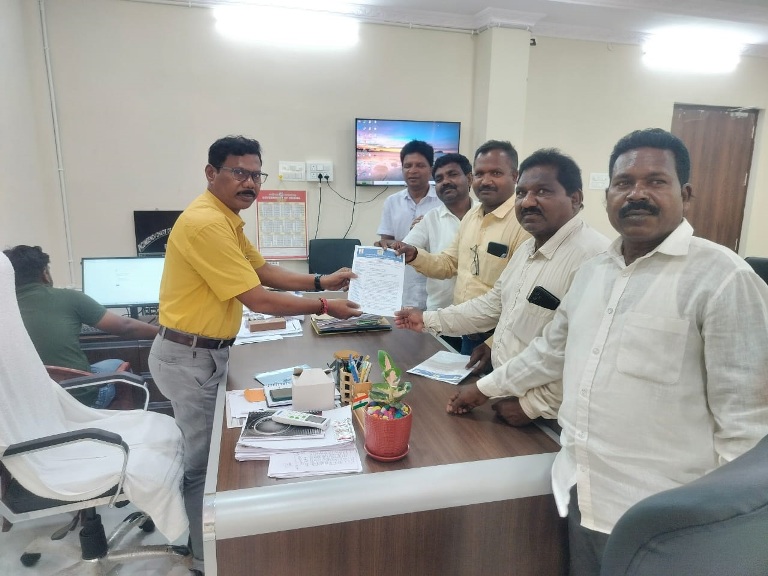
Rayagada, April 27: A memorandum on Human Rights Violations, Environmental Risks and Procedural Irregularities in the Proposed Sijimali Bauxite Mining based upon ground-level grievances received and testimonies of affected communities, particularly the Dom community (Scheduled Caste) was submitted to Rayagada Collector.
The proposed mining project involves the extraction of approximately 9 million tonnes per annum (MTPA) of bauxite over an area of 1549 hectares, including forest and agricultural land, situated within Fifth Schedule Areas inhabited predominantly by Adivasi and Dalit (Dom) Communities. The project is expected to directly impact around 18 villages with a population of over 3000 people, while indirectly affecting nearly 98 villages in the surrounding region. These villages are ecologically sensitive and socio-culturally significant villages, where communities are deeply dependent on jal, jangal, zameen (water, forest, and land) for their livelihood, identity, and traditional way of life.
The memorandum mentioned about prima facie violation of constitutional and statutory safeguards, particularly the provisions of the Panchayats (Extension to Scheduled Areas) Act, 1996 (PESA), the Forest Rights Act, 2006 (FRA) and protections under the Fifth Schedule of the Constitution. There was a significant absence of Free, Prior and Informed Consent (FPIC) of the Gram Sabhas, along with serious allegations that Gram Sabha proceedings have been coerced and manipulated, thereby undermining the autonomy and self-governance rights of Adivasi and Dalit communities.
The Dom Samaj expressed grave concerns regarding human rights violations in the affected areas. As highlighted in the community representation, there had been allegation of police intimidation, forced entry into villages, lathi-charge, use of tear gas, destruction of property and physical injuries, including to women. The arrest of villagers and activists, along with the filing of FIRs under IPC/BNS provisions, reflected a disturbing pattern of criminalising democratic dissent. Such actions created an atmosphere of fear where communities were unable to access forests, markets, and even basic services like healthcare.
This is not consistent with the rule of law but instead reflects a misuse of state machinery, raising concerns that governance mechanisms were being used to advance corporate interests at the cost of vulnerable populations, the memorandum said. Such actions raise serious concerns about the violation of fundamental rights, including the right to livelihood, dignity, and freedom of expression, and indicate a troubling pattern of criminalisation of legitimate protest movements.
The environmental implications of the project are deeply alarming. The proposed mining activity is likely to result in large-scale deforestation, involving approximately 699 hectares of forest land, along with significant loss of biodiversity and wildlife habitats.
Further, the project is expected to have severe socio-economic consequences. The affected communities, who largely depend on forest produce, rainfed agriculture and traditional livelihoods, are at risk of losing their primary sources of income and sustenance.
This may lead to displacement of families, increased poverty, and forced migration. In advent of the proposed mining, Dalit Community-Particularly the Dom households in the mining area will face compound marginalisation, as the Dom households lack agricultural land ownership, leaving them without a secure livelihood base. They have been systematically excluded from the benefits of the Forest Rights Act (FRA) 2006, despite eligibility under Section 2(o). This exclusion perpetuates historical injustice and denies them constitutional entitlements.
As Dalits, they already face entrenched caste-based discrimination and limited access to mainstream development schemes. Being forest-dependent without FRA recognition compounds their marginalization, creating a “double burden” of exclusion. Since they lack agricultural land ownership, forests act as their primary livelihood source. The Dom households are heavily dependent on forest resources for fuel, fodder, minor forest produce, and grazing. Any restriction or diversion of forest land will directly cut off their daily subsistence.
Despite residing in the area for generations, the Dom community has not been able to secure homestead pattas under various government schemes, leaving them without legal recognition of their settlements. This structural exclusion makes them highly vulnerable to displacement. If the company occupies the land where they currently live, families will face an immediate survival crisis, as they have no alternative housing or land ownership to fall back on. Fundamentally, the impact of the proposed mining on the Dom community will not be limited to physical displacement but constitutes a multi-dimensional crisis—loss of shelter, livelihood, education, cultural identity and constitutional justice. The Dom community, already marginalized, will suffer disproportionately and face compounded vulnerabilities due to the project.
In view of these concerns, Dom Samaj has demanded immediate cessation of police repression and coercive actions in the affected villages, including stopping intimidation, forced entry, and harassment of villagers, ensuring protection of fundamental and constitutional rights of Adivasi and Dalit (Dom) communities, including their right to peaceful protest and democratic participation, stopping all forms of forceful implementation of the mining project without the free and informed consent of the Gram Sabhas, taking strict action against officials responsible for human rights violations, including those involved in lathi-charge, use of force and intimidation, destruction of property, misuse of authority and immediate withdrawal of all false cases and FIRs filed against innocent villagers, including cases registered under IPC/BNS and other provisions, immediate release and protection of all detained villagers and activists, and prevent further arbitrary arrests, providing guarantee that no development or mining activity proceeds without legal compliance, including: Gram Sabha consent under PESA, recognition of rights under FRA and proper environmental and forest clearances, stopping misuse of police and administrative machinery for suppressing community voices and facilitating corporate interests, ensuring fair and transparent investigation into incidents of violence and repression, with accountability of responsible authorities, protecting the livelihoods, land, and forest rights of local communities, particularly those dependent on forest resources for survival, ensuring that no displacement takes place without rehabilitation, legal recognition, and consent, especially for vulnerable groups like the Dom community, taking immediate steps to restore normalcy in the region, ensuring that villagers can safely access forests, markets, and essential services like healthcare and education, district administration taking immediate and concrete steps to ensure the provision of homestead pattas and formal legal recognition for Dom households, many of whom continue to reside without secure land tenure despite generations of habitation.