SNANA YATRA AND RATH YATRA OF LORD JAGANNATH: RITUAL, THEOLOGY AND CULTURAL SIGNIFICANCE IN THE JAGANNATH TRADITION OF ODISHA.
Siddharth Saswat Panda
Author
Introduction :
The Jagannath tradition constitutes one of the most distinctive religious systems of South Asia. Unlike many regional forms of Hindu worship, Jagannath culture transcends sectarian boundaries and incorporates elements from tribal, Buddhist, Shaiva, Shakta, and Vaishnava traditions. Scholars such as Anncharlott Eschmann, Hermann Kulke, and Gaya Charan Tripathi have described the Jagannath tradition as a remarkable synthesis of diverse religious currents that evolved over centuries within the socio-cultural milieu of Odisha.
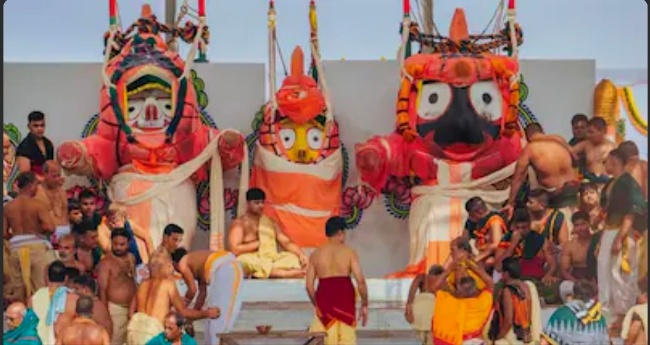
The deity Jagannath, literally meaning “Lord of the Universe,” occupies a unique position in Indian religious history. Although generally identified with Vishnu or Krishna, Jagannath simultaneously embodies multiple theological dimensions. The wooden icons of Jagannath, Balabhadra, and Subhadra preserve traces of tribal worship, while their ritual practices reveal strong influences from classical Hindu traditions. Modern scholarship recognizes the Jagannath cult as one of the most inclusive and dynamic religious traditions of India.
Among the annual festivals celebrated in the Jagannath Temple, Snana Yatra and Rath Yatra represent the most visible manifestations of this inclusive theology. The former symbolizes ritual purification and divine embodiment, whereas the latter dramatizes the Lord’s movement from the temple to the public sphere, making divine grace accessible to all devotees irrespective of caste, creed, gender, or social status.
Scriptural Foundations of the Festivals
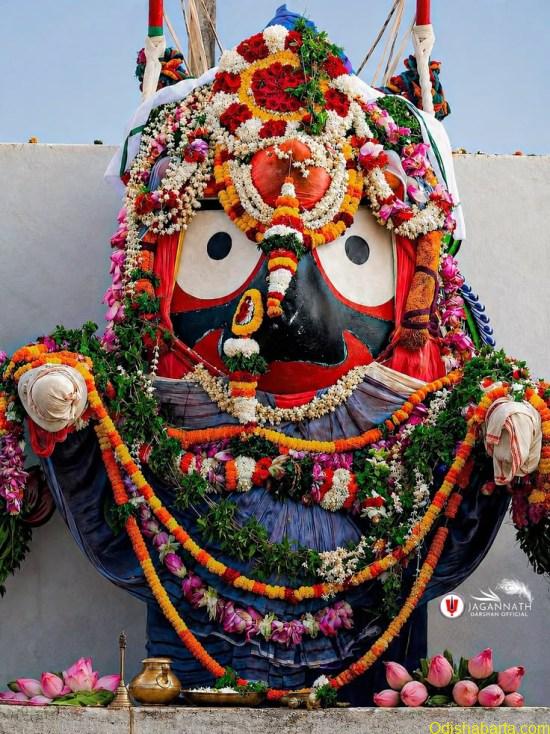
The origins of Rath Yatra and associated rituals are deeply embedded in Puranic literature. The Skanda Purana, particularly its Utkala Khanda and Purushottama Mahatmya sections, contains extensive references to Lord Jagannath, King Indradyumna, Nilamadhava worship, and the sacred geography of Purushottama Kshetra. The text describes the sanctity of the deity and emphasizes the spiritual merit derived from participating in the annual chariot festival.
Similarly, the Brahma Purana narrates the legendary account of King Indradyumna’s quest for Nilamadhava and the eventual manifestation of Jagannath in wooden form (Daru Brahma). The festival traditions associated with the deity are presented as acts of divine compassion through which the Lord grants direct access to devotees.
The Puranic narratives emphasize a central theological principle: unlike distant and transcendent deities, Jagannath periodically leaves His sanctum and enters the public domain. This movement symbolizes divine outreach and universal grace.
- Historical Evolution of the Jagannath Cult
The historical development of Jagannath worship remains a subject of scholarly debate. Many historians identify tribal origins in the worship of wooden deities by the Sabara community of Odisha. According to traditional accounts preserved in the Skanda Purana, the tribal chief Visvavasu worshipped Nilamadhava in a forest shrine before the deity was incorporated into mainstream Hindu worship.
During the medieval period, particularly under the Eastern Ganga dynasty, Jagannath emerged as the central deity of Odisha. The construction of the grand temple at Puri by King AnantavarmanChodaganga Deva in the twelfth century institutionalized the cult and transformed it into a major centre of pilgrimage. Subsequent rulers legitimized their authority by presenting themselves as servants (Rauta) of Lord Jagannath rather than sovereign monarchs.
The annual Rath Yatra gradually evolved into a state-sponsored religious event, attracting pilgrims from different regions of India. Over time, it became one of the largest religious gatherings in the world.
- Snana Yatra: The Festival of Divine Purification
Snana Yatra, celebrated on the full moon day of Jyestha, marks the ceremonial bathing of Lord Jagannath, Balabhadra, Subhadra, and Sudarshana. The festival represents the first public appearance of the deities outside the sanctum sanctorum during the annual ritual cycle.
The deities are brought to the Snana Mandapa in an elaborate procession known as Pahandi. Accompanied by traditional music, chanting, and devotional fervour, the procession transforms the temple complex into a sacred theatre of divine manifestation.
The central ritual involves bathing the deities with 108 pitchers of consecrated water drawn from the sacred Suna Kua (Golden Well). The number 108 possesses profound cosmological significance in Hindu thought, symbolizing spiritual completeness and cosmic harmony. The bathing ceremony signifies purification, renewal, and divine blessing.
From an anthropological perspective, Snana Yatra illustrates the remarkable humanization of the divine within Jagannath theology. The deities are treated not merely as symbolic representations but as living beings who participate in human experiences.
- Hati Besha and Religious Inclusiveness
Following the bathing ceremony, the deities are adorned in the famous Hati Besha or Elephant Attire. This unique ritual is interpreted in various ways by scholars and devotees. One tradition associates it with Lord Ganesha and the Ganapatya sect, reflecting the assimilative character of Jagannath worship.
The Jagannath tradition has historically accommodated diverse theological perspectives. Shaivas perceive Jagannath as Shiva, Vaishnavas identify Him with Krishna, Shaktas associate Him with the cosmic power of the Goddess, and certain Buddhist traditions regard Him as a manifestation of the Buddha. This pluralistic orientation has enabled the cult to transcend sectarian boundaries and function as a unifying force in Odia society.
Anasara: The Divine Illness
After the sacred bath, the deities are believed to fall ill due to exposure to the large quantity of water used during the ritual. Consequently, they retire to the AnasaraGhara, where they remain away from public view for approximately fifteen days.
This period, known as Anasara, represents one of the most fascinating dimensions of Jagannath worship. The deities receive herbal medicines and therapeutic treatments administered by designated servitors. Public darshan is suspended, and devotees worship painted representations known as Anasara Pattis.
Theologically, Anasara reflects the doctrine of divine immanence. Jagannath is not a distant deity removed from worldly experiences but a compassionate Lord who shares the physical conditions of humanity. By experiencing illness and recovery, the deity becomes emotionally accessible to devotees.
The conclusion of Anasara is marked by Nava Jaubana Darshana (the vision of renewed youth), during which the rejuvenated deities reappear before the public. This event prepares the way for the grand celebration of Rath Yatra.
Rath Yatra: The Festival of Universal Grace
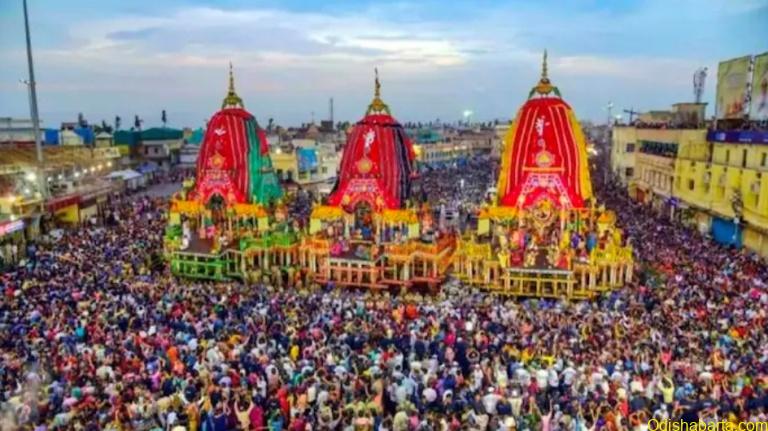
Rath Yatra, celebrated on the second day of the bright fortnight of Ashadha, constitutes the most important festival of the Jagannath tradition. The festival commemorates the annual journey of Lord Jagannath, Balabhadra, and Subhadra from the main temple to the Gundicha Temple.
Three magnificent wooden chariots are constructed anew every year according to traditional prescriptions found in temple records and Puranic traditions. The chariots are:
- Nandighosha – Chariot of Lord Jagannath.
- Taladhwaja – Chariot of Lord Balabhadra.
- Darpadalana (Devadalana) – Chariot of Devi Subhadra.
The construction process itself is regarded as a sacred ritual involving hereditary artisans whose skills have been preserved across generations. The Skanda Purana describes the preparation and sanctification of these chariots as integral aspects of the festival.
One of the most significant features of Rath Yatra is the symbolic movement of the deity from the temple to the public sphere. Since entry into the sanctum has historically been restricted, the festival enables all devotees to receive the Lord’s blessings. This aspect has led many scholars to describe Rath Yatra as a celebration of spiritual democracy. ChheraPahanra: The Theology of Humility and Equality
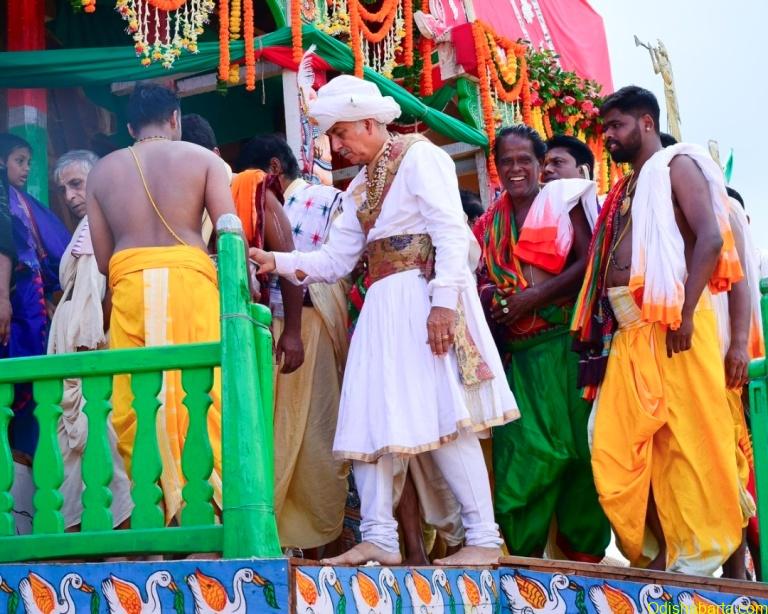
One of the most distinctive and symbolically powerful rituals of Rath Yatra is ChheraPahanra. After the deities are seated upon their respective chariots, the Gajapati Maharaja of Puri, regarded as the foremost servitor (Adya Sevaka) of Lord Jagannath, arrives in a ceremonial procession and sweeps the platforms of the chariots with a golden broom while sprinkling sandalwood-scented water. This ritual is performed both during the outward journey to Gundicha Temple and during the return journey (Bahuda Yatra).
The significance of ChheraPahanra extends far beyond ritual performance. It represents the subordination of temporal authority to spiritual sovereignty. The king, despite being the highest earthly authority, publicly assumes the role of a servant before the Lord. The ritual communicates a profound message of equality, humility, and service, emphasizing that all distinctions of caste, status, and power dissolve before Jagannath, the Lord of the Universe.
This democratic spirit constitutes one of the defining characteristics of Jagannath culture. The ritual serves as a public affirmation that the highest ideal of leadership is not domination but service. In the words of Jagannath philosophy, all beings are servants of the Divine, and no individual stands above another in the presence of God.
Gundicha Yatra and the Sacred Geography of Devotion
Following the commencement of Rath Yatra, the deities proceed along the Grand Road (Bada Danda) toward the Gundicha Temple, situated approximately three kilometres from the main temple. According to traditional belief, the Gundicha Temple represents the garden house of the deities and is closely associated with Queen Gundicha, the wife of King Indradyumna, the legendary founder of the Jagannath tradition.
The journey from Srimandir to Gundicha Temple possesses deep theological significance. Many Vaishnava interpretations identify the journey symbolically with Lord Krishna’s return to Vrindavan, where He reunites with His devotees. Others interpret it as the Lord’s movement from transcendence to immanence, leaving the sanctified confines of the temple to bless humanity directly.
The stay of the deities at Gundicha Temple for seven days transforms the shrine into the focal point of devotional activities. Pilgrims from diverse social, linguistic, and cultural backgrounds gather to witness the Lord in a more intimate setting. The event symbolizes the universal accessibility of divine grace and reinforces the inclusive character of Jagannath worship.
Bahuda Yatra: The Return Journey
After their stay at Gundicha Temple, the deities begin their return journey to the Jagannath Temple in a festival known as Bahuda Yatra. While the outward journey symbolizes divine outreach, the return journey represents spiritual fulfilment and reunion.
An important event during Bahuda Yatra is the halt at the Mausi Maa Temple, where Lord Jagannath is offered Poda Pitha, a traditional Odia baked rice cake believed to be His favourite delicacy. This ritual highlights the intimate and familial dimensions of Jagannath worship, wherein the deity participates in ordinary human relationships and customs.
The return journey attracts enormous crowds and generates a devotional atmosphere comparable to that of the main Rath Yatra. The movement of the chariots once again transforms the Grand Road into a sacred space where the boundaries between the divine and the human become fluid and permeable.
Suna Besha: Manifestation of Divine Sovereignty
On the day following Bahuda Yatra, the deities are adorned in the magnificent Suna Besha or Golden Attire. During this ritual, Lord Jagannath, Lord Balabhadra, and Devi Subhadra are decorated with elaborate gold ornaments while seated on their chariots before the Lion Gate (Singhadwara) of the temple. The splendour of this adornment attracts lakhs of devotees and constitutes one of the most anticipated events of the festival cycle.
Historically, Suna Besha is associated with the Gajapati ruler Kapilendra Deva, who is believed to have donated large quantities of gold to the temple following military victories in the fifteenth century. Over time, the ritual evolved into a powerful expression of divine kingship and cosmic sovereignty.
From a theological perspective, Suna Besha presents Jagannath as Rajadhirajathe King of Kings. While Jagannath often appears as an approachable and humanized deity during Snana Yatra and Anasara, Suna Besha reveals His majestic and transcendent dimension. The golden ornaments symbolize spiritual wealth, divine glory, and the Lord’s role as the supreme protector of the universe.
Adharapana and Niladri Bije
Following Suna Besha comes the ritual known as Adharapana. During this ceremony, large earthen vessels filled with a sweet beverage prepared from milk, cheese, sugar, spices, coconut, and other ingredients are offered to the deities while they remain seated on their chariots. After the offering, the vessels are deliberately broken. According to traditional belief, the offering is intended for numerous guardian deities and spiritual beings accompanying Lord Jagannath during the festival.
The symbolic breaking of the vessels signifies the distribution of divine blessings to all beings, visible and invisible. The ritual further demonstrates the expansive and inclusive worldview of Jagannath culture.
The concluding ceremony of the festival is Niladri Bije, during which the deities ceremonially re-enter the sanctum of the Jagannath Temple. This event marks the completion of the annual journey and the restoration of the cosmic order. Traditional narratives associated with Niladri Bije emphasize reconciliation, love, and divine grace, themes that resonate deeply within Odia devotional literature.
Social and Cultural Dimensions of Rath Yatra
Beyond its religious significance, Rath Yatra functions as one of the most important cultural institutions of Odisha. The festival has profoundly influenced Odia literature, performing arts, sculpture, painting, and folklore. Poets from the medieval Bhakti period to modern Odia writers have celebrated the spiritual grandeur of Lord Jagannath and the emotional intensity of Rath Yatra.
The festival also serves as a powerful mechanism of social integration. Individuals belonging to different castes, communities, regions, and even religions participate collectively in the pulling of the chariots. This shared participation creates a temporary yet meaningful experience of social unity and collective identity.
The Jagannath tradition’s emphasis on inclusiveness has enabled it to function as a cultural bridge connecting diverse communities. The annual Rath Yatra demonstrates how religious rituals can foster social cohesion and reinforce shared cultural values.
Jagannath Culture and Odia Identity
The development of Odia identity is inseparable from the Jagannath tradition. Historians have observed that Lord Jagannath emerged as a unifying symbol during periods of political fragmentation and external challenge. The deity came to embody not merely a religious ideal but also the collective aspirations of the people of Odisha.
The annual celebration of Snana Yatra and Rath Yatra reinforces this cultural consciousness. Through these festivals, successive generations participate in a living heritage that links the past with the present. The rituals preserve ancient traditions while simultaneously adapting to contemporary circumstances, thereby ensuring the continuity of Odia civilization.
As a symbol of cultural resilience, Jagannath continues to inspire artistic creativity, social harmony, and regional pride. The global celebration of Rath Yatra in cities across Europe, North America, Africa, and Asia demonstrates the universal appeal of Jagannath consciousness and its capacity to transcend geographical and cultural boundaries.
Conclusion
Snana Yatra and Rath Yatra represent far more than annual religious festivals. They constitute a comprehensive expression of Jagannath philosophy, integrating theology, ritual, culture, ethics, and social values into a unified spiritual tradition. Beginning with the sacred bath of Snana Yatra, progressing through the contemplative period of Anasara, culminating in the grand procession of Rath Yatra, and concluding with Niladri Bije, the festival cycle dramatizes the eternal relationship between the Divine and humanity.
The festivals communicate enduring messages of humility, equality, inclusiveness, and universal love. Through ChheraPahanra, the king becomes a servant. Through Rath Yatra, the Lord comes out to meet His devotees. Through Suna Besha, divine sovereignty is revealed. Through Adharapana, blessings are shared with all creation.
In a world often divided by social, political, and religious differences, the Jagannath tradition offers a timeless vision of unity in diversity. The rolling chariots of Puri continue to carry not only sacred images but also profound ideals of compassion, service, and spiritual liberation. Consequently, Snana Yatra and Rath Yatra remain among the most remarkable manifestations of India’s living cultural and religious heritage and continue to inspire millions across the globe.
Siddharth Saswat Panda
At /Po – Junagarh , Kalahandi – 766014
Contact :- +91 9437362929 /+91 9438397029
Gmail :- [email protected]
FOR ANY LEGAL ISSUE EDITOR,PUBLISHER ODISHABARTA ARE NOT ACCOUNTABLE
REF:DISCLAIMER
References
- Skanda Purana, Utkala Khanda, Purushottama Mahatmya.
- Brahma Purana, Chapters on Purushottama Kshetra.
- Eschmann, Anncharlott, Hermann Kulke & Gaya Charan Tripathi (eds.), The Cult of Jagannath and the Regional Tradition of Orissa, Manohar Publishers, New Delhi, 1978.
- Kulke, Hermann and Burkhard Schnepel (eds.), Jagannath Revisited: Studying Society, Religion and the State in Orissa, Manohar Publishers, New Delhi, 2001.
- Starza, Olaf. The Jagannatha Temple at Puri: Its Architecture, Art and Cult, E.J. Brill, Leiden, 1993.
- Mishra, K.C. The Cult of Jagannath, Institute of Orissan Culture, Bhubaneswar.
- Tripathy, Mahimohan. “The Festivals of Lord Jagannath,” Orissa Review.
- Pattnaik, Pradeep. “Significance of ChheraPahanra,” Odisha TV.
- Government of Odisha, Orissa Review Special Issue on Jagannath Culture.