Rayagada DMF: stagnant allocations, spending lags and maximum outflow to Kalahandi
Dr.Badal Tah,Odishabarta
Rayagada, September 28: While official figures presented in the Odisha Legislative Assembly project an image of steady revenue generation from Rayagada’s mineral wealth, a closer analysis of data tabled by Odisha’s Steel and Mines Minister Bibhuti Bhusan Jena reveals glaring gaps, policy contradictions and execution bottlenecks in the administration of the District Mineral Foundation (DMF). Responding to an unstarred question from Rayagada MLA Kadraka Appala Swamy, the department provided a detailed ledger of mining revenues and DMF performance since 2015–16. However, the numbers lay bare critical discrepancies between funds collected and benefits delivered to the district’s predominantly tribal mining-affected belt.
The most glaring discrepancy is the complete suspension of new project approvals over the last two financial years with zero allocations despite Rs.118 crores inflow. In FY 2024–25 and FY 2025–26, the DMF trust collected Rs 65.39 crores and Rs 53.45 crores respectively—the highest revenue phases in the fund’s history.During this entire 24-month period, exactly 0 projects were sanctioned, Rs 0 was released and Rs 0 was spent. While mineral extraction reached peak levels, community welfare interventions ground to a complete halt, leaving over Rs 118.84 crore in fresh collections sitting entirely idle in state coffers without statutory allocation.
63% of actual expenditure has been diverted out of Rayagada. Under the statutory mandate of the Mines and Minerals (Development and Regulation) Act (MMDR), DMF funds are earmarked specifically to alleviate environmental and socioeconomic distress in mining-affected local communities. Yet, the expenditure ledger shows an unprecedented diversion. Out of total stated expenditure amounting Rs 212.399 crore, a staggering Rs 135.037 crores—representing 63.5% of total money spent—was transferred to neighbouring Kalahandi district as its “share”.
Out of Rs 415.15 crore collected directly within Rayagada over a decade, only Rs 76.06 crores has actually been expended within Rayagada’s own boundaries. This equates to an effective local fund utilization rate of just 18.3% of gross collections. Even for projects formally cleared by the DMF Board for Rayagada, ground-level execution has suffered severe attrition. Out of Rs 161.19 crores sanctioned across 1,427 projects inside Rayagada, only Rs 89.27 crores was released to implementing line departments.
Of the released funds, only Rs 76.06 crores was translated into completed work, leaving Rs 85.13 crores of sanctioned development work unexecuted or stalled. For example, in FY 2021–22, 268 projects were sanctioned at an estimated Rs 33.34 crores. To date, only Rs 7.87 crore has been liquidated—meaning more than 75% of that fiscal year’s approved budget remains unspent five years later.
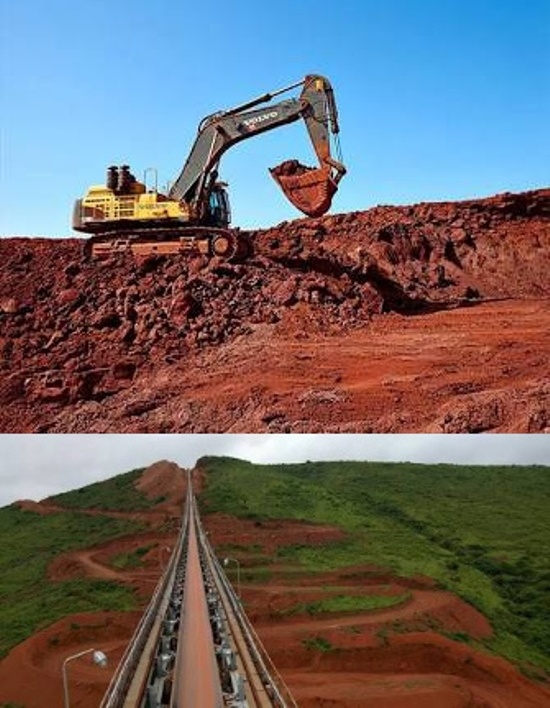
The revenue schedules confirm that Rayagada’s DMF is almost entirely dependent on a single mineral lease.Bauxite mining at the Baphlimali mines by Utkal Alumina International Ltd. generates virtually all the district’s statutory levies, contributing Rs 252.6 crores in royalties and Rs 28.79 crores in DMF for 2024–25 alone. By contrast, manganese, graphite, and decorative stone leases across Nishikhal, Anajori and Bandhamundi contribute negligible or erratic amounts, reflecting weak compliance oversight and stagnant non-bauxite mining recovery.
Though Kadraka’s query explicitly demanded a status report on steps taken to safeguard tribal land, traditional rights, and livelihoods in active mining corridors, the ministerial reply sidestepped this statutory mandate entirely. Instead of reporting on FRA (Forest Rights Act) compliance, habitat rehabilitation, or restitution of affected agricultural holdings, the government substituted routine infrastructure lists—such as classroom additions, solar pumps, and dining sheds—effectively obscuring structural community displacement and environmental degradation under standard public works data. Many connectivity projects—such as ghat-cutting, box culverts, and road widening—serve primarily as industrial feeder networks connecting extraction belts to state highways, rather than addressing local farm-to-market needs. Heavy multi-axle mineral transportation frequently destroys these rural roads within months of completion, generating pervasive fugitive dust that settles on adjacent tribal paddy fields and perennial horticultural orchards. Under national PMKKKY guidelines, DMF funds are intended to deliver additional, high-priority developmental outcomes to directly impacted communities. Instead, the project list demonstrates that DMF money is routinely substituted for routine state departmental work. Basic school maintenance, boundary walls, furniture supply, and civic auditorium construction—standard obligations of the School & Mass Education, Works, and Higher Education departments—are systematically offloaded onto mining compensation funds.
“The portfolio shows heavy fragmentation across minor civil contracts (Rs 10 lakhs to Rs 20 lakhs per project). This piece-meal approach prioritizes small-contractor patronage over durable, high-impact regional solutions, such as multi-specialty healthcare centers, advanced pollution monitoring, or specialized water treatment facilities to counter bauxite run-off. Despite drawing hundreds of crores from bauxite mining around Baphlimali and adjacent hill ranges, the project roster contains almost no long-term interventions addressing key ecological impacts. Surrounding tribal habitations face high levels of airborne particulate matter, yet no dedicated respiratory diagnostic facilities or targeted epidemiological studies have been funded through the DMF. While extractive activities displace agro-forestry livelihoods, minor forest produce (MFP) collection, and shifting cultivation, DMF allocations remain heavily biased toward brick-and-mortar masonry. Sustainable agrarian rehabilitation, soil restoration, land titling support under the Forest Rights Act (FRA), and local community enterprise investments remain marginal compared to civil construction expenditures.