National Press Day Highlights the Need for Strong Media-Administration Coordination in Gajapati
Journalism: Populist or Responsible? — Media Representatives Stress Accountability, Development and Ground-Level Reporting
Bhagabat Padhi | Odishabarta
Parlakhemundi, November 18, 2026: Highlighting the vital role of journalism in reflecting the concerns of society and bringing pressing public issues to the attention of the administration, media representatives in Gajapati district stressed the need for stronger coordination between the media and the administration on the occasion of National Press Day.
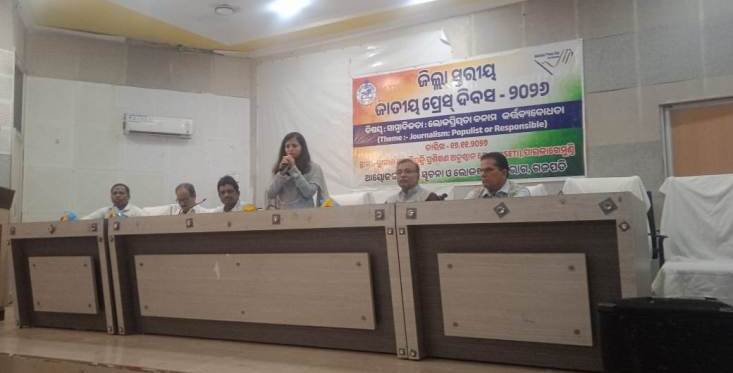
The programme, organised at the UBSETI Conference Hall in Parlakhemundi, centred on the theme “Journalism: Populist or Responsible.” Addressing the gathering as the chief guest, Sub-Collector Ms. Bhagat Samal Kalyan Rao appreciated the efforts of media personnel during Cyclone Arnab and their contribution to highlighting the hardships faced by people in disaster-affected areas.
She observed that the media played an important role in helping the administration reach people during the natural calamity by bringing their difficulties, grievances and urgent needs to the authorities’ attention. As a relatively new entrant to the administrative service, she acknowledged the importance of ground-level media reporting in understanding the actual situation and facilitating timely administrative intervention.
Veteran media representative Dwijendranath Padhi presided over the programme. Among others, Garudadhwaja Choudhury, Basant Panda, Sanoj Patnaik, Bhagabat Padhi, Saroj Biro, Santosh Patnaik and Dilip Satapathy participated in the discussion and highlighted several pressing issues concerning the district.
The speakers emphasised that effective coordination between the administration and the media was essential for identifying public grievances, highlighting development-related concerns and ensuring accountability. They pointed out that media personnel often reach remote and inaccessible areas, bringing ground realities to the attention of the administration even before official machinery can respond.
Referring to the disruption of road communication during Cyclone Arnab, the participants noted that temporary restoration and patchwork repairs had helped improve connectivity in affected areas. However, they stressed the need for more comprehensive and durable infrastructure development to prevent recurring difficulties.
They further observed that Gajapati, being a relatively backward and geographically challenging district, required greater administrative attention and stronger institutional coordination. Media personnel often venture into vulnerable and remote locations to report the plight of affected communities and communicate their concerns to the authorities.
The speakers also acknowledged the challenges faced by journalists, who frequently put aside personal and family commitments to reach affected people and report their problems. They described the media as an important link between the public and the administration, particularly during emergencies.
The participants stressed that a stronger and more constructive relationship between the two institutions would promote transparency, accountability and effective public service delivery, ultimately strengthening people’s confidence in the administration.
Media representatives from both print and electronic media attended the programme. District Information and Public Relations Officer (DIPRO), Gajapati, Pradipta Gurumayi, coordinated the event.