Massive Rally at Rayagada; Opposition Parties Seek Repeal-MMDR Act.26
Dr. Badal Tah,Odishabarta
Joint memorandum submitted to President through Rayagada Collector; parties raise concerns over federalism, mineral revenues and tribal rights
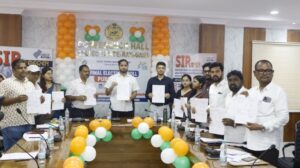
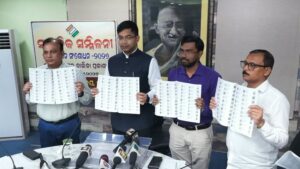
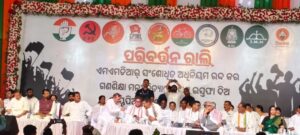
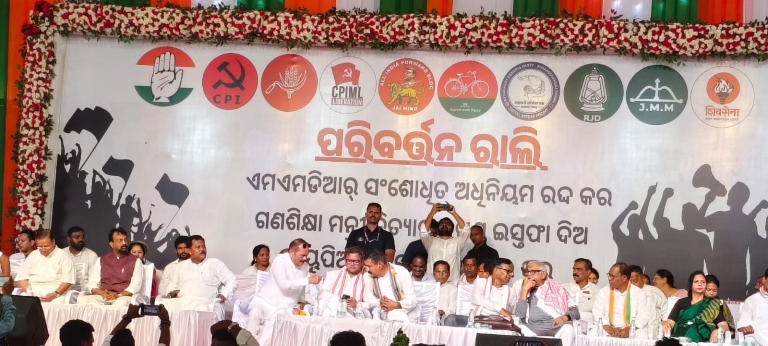
RAYAGADA, September,21: Several political and social organisations, including the CPI, CPI(M), CPI(ML) Liberation, RSP, JMM, Shiv Sena and RJD, have urged President Droupadi Murmu to repeal the Mines and Minerals (Development and Regulation) Amendment Act, 2026, in its present form. After a mammoth convention & massive rally, a joint memorandum containing a 10-point charter of demands was submitted through the Rayagada District Collector for transmission to the President.
The signatories alleged that the amendment could have far-reaching implications for mineral management, State revenues, federal relations and the constitutional and statutory safeguards available to communities affected by mining.
A major concern raised in the memorandum relates to the constitutional division of powers between the Union and the States. The parties referred to Entries 49 and 50 of the State List under the Seventh Schedule, arguing that States have constitutionally recognised powers relating to taxation on lands and mineral rights.
They contended that excessive centralisation of control over mineral resources could weaken the federal structure and reduce the role of mineral-rich States in decisions concerning their own natural resources.Supreme Court verdict was cited. The memorandum also invoked the July 25, 2024 judgment of the nine-judge Constitution Bench of the Supreme Court in Mineral Area Development Authority v. Steel Authority of India Ltd.
The parties pointed to the court’s holding that royalty is not a tax and its recognition of the States’ constitutional authority to impose taxes on mineral-bearing land. The signatories argued that subsequent parliamentary legislation should not have the effect of extinguishing constitutionally recognised State revenue claims. The parties said Odisha, with substantial reserves of iron ore, chromite, bauxite, manganese and coal, has significant financial stakes in the issue. According to the memorandum, the State could have claims exceeding Rs.1 lakh crore following the Supreme Court’s 2024 judgment. The signatories argued that any reduction or retrospective invalidation of such revenue would affect the State’s ability to finance programmes in health, education, irrigation, tribal development and rehabilitation.
They also questioned provisions that, according to them, could retrospectively affect State levies, cesses and other statutory revenue claims, arguing that such measures raise constitutional questions involving Articles 14 and 300A. The memorandum placed particular emphasis on mining areas located in tribal regions. The parties referred to the Fifth Schedule of the Constitution, Article 244, the Panchayats (Extension to Scheduled Areas) Act, 1996, and the Forest Rights Act, 2006.
They cautioned that any dilution of the rights of Gram Sabhas or statutory safeguards for tribal communities could have consequences for land, livelihoods, forests and the environment in mining-affected areas. Invoking Article 39(b) of the Constitution, the parties argued that material resources of the community should be managed and distributed in a manner that serves the common good.
They further maintained that mining-bearing States and local communities bear a disproportionate share of the environmental and social costs associated with mineral extraction, including deforestation, displacement and ecological degradation.
The signatories also criticised what they described as inadequate consultation with mineral-rich States, tribal organisations, affected communities and environmental experts before the legislative changes were pursued. They called for greater dialogue between the Union and States and urged that mineral policy be framed in accordance with the principles of cooperative federalism.
The political and social organisations urged President Murmu to intervene and facilitate reconsideration of the amendment by Parliament. They sought withdrawal of provisions that, in their view, undermine State fiscal powers, tribal safeguards and the interests of mining-affected communities. The memorandum concluded with a call for a more consultative approach to mineral governance, balancing national mineral development with State revenues, environmental protection and the rights of local communities.
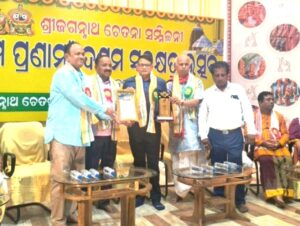
The dais was adorned, rally led by Congress leaders like State President Bhakta Das, Ex-State President Niranjan Pattanaik, Ex-State President Sarat Pattanaik, MP Saptagiri Ulaka, MLA Appalaswamy Kadraka, MLA Tara Prasad Bahinipati, MLA Rama Chandra Kadam, State Women President Minakshi Bahinipati, State Secretary Durga Panda, CPI(ML) District President Tripati Gomango and many others.