Debriefing of Senior Police Officers Engaged in Puri Rath Yatra–2026
Akshya Rout,Odishabarta
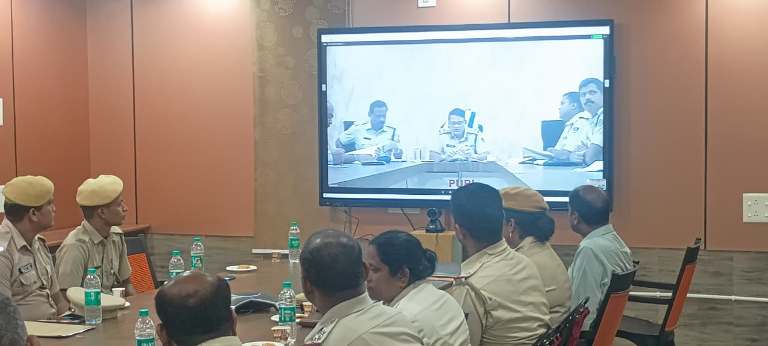
Bhubaneswar/Cuttack, 20 August 2026:A comprehensive debriefing of the senior police officers who were engaged in the security, crowd management and traffic management arrangements for Puri Rath Yatra–2026 was conducted to review the preparedness, execution and overall policing arrangements during the festival.
The debriefing provided an important platform to assess the effectiveness of the arrangements, review operational experiences and identify key learnings for strengthening the management of future large-scale religious gatherings.
The Rath Yatra of Lord Jagannath at Puri is one of the largest religious congregations in the country, witnessing the participation of lakhs of devotees from Odisha and different parts of India. Managing such a massive congregation requires meticulous advance planning, coordinated deployment of resources, seamless inter-agency coordination, effective crowd regulation, robust traffic management and continuous situational monitoring.
The debriefing covered the security and deployment strategy adopted during Rath Yatra, Bahuda Yatra, Suna Besha and other associated rituals and events. Senior officers reviewed the deployment pattern, sector-wise responsibilities, coordination among field formations and the effectiveness of the arrangements made for maintaining law and order and ensuring the safety of devotees.
Detailed discussions were also held on crowd management and pedestrian movement. The functioning of holding areas, access-control points, regulated movement of devotees, prevention of congestion and management of high-density locations were reviewed. The officers shared their field experiences regarding crowd behaviour, movement patterns and the measures adopted to prevent overcrowding and ensure smooth movement.
The traffic management arrangements were reviewed in detail, including diversion plans, vehicular restrictions, parking arrangements, management of incoming and outgoing traffic, movement of public transport and facilitation of emergency vehicles. The experience of handling heavy vehicular inflow towards Puri and maintaining connectivity on important approach roads was discussed to identify measures for further improvement.
The security arrangements around Sri Jagannath Temple and adjoining sensitive locations were also reviewed. Particular emphasis was placed on access control, regulation of movement in restricted areas, protection of critical installations and maintaining a balance between security requirements and the convenience of devotees.
The debriefing further examined the coordination mechanism among different police units and stakeholder agencies, including district police, armed police, intelligence units, traffic police, fire services, health authorities, municipal authorities, temple administration and other supporting agencies. The importance of clearly defined responsibilities, timely communication and coordinated decision-making at different levels was emphasised.
The role of technology-enabled policing was another important area of discussion. The use of CCTV surveillance, communication systems, control rooms, real-time monitoring and other technological tools for maintaining situational awareness and facilitating quick decision-making was reviewed. The officers also discussed the scope for further strengthening technology-based monitoring and information-sharing mechanisms during future events.
The emergency response and disaster-management arrangements were reviewed in view of the challenging weather conditions experienced during the festival. Particular attention was given to the preparedness of police and other emergency-response agencies to deal with heavy rainfall, sudden changes in weather, medical emergencies, evacuation requirements and other unforeseen situations.
The management of lost and separated persons, particularly children, elderly persons and vulnerable devotees, was also discussed. The measures adopted for receiving complaints, establishing identity, coordinating with control rooms and facilitating reunification with family members were reviewed. The importance of strengthening dedicated assistance mechanisms for such cases during future congregations was highlighted.
Special attention was given to the safety and assistance of women, children, elderly persons and other vulnerable devotees. The field-level experience of police personnel in responding to distress calls and providing timely assistance was discussed, with emphasis on making future arrangements more responsive and people-centric.
The medical and emergency response system was also reviewed, including coordination with health authorities, positioning and movement of ambulances, quick response to medical emergencies and facilitation of access for emergency services through congested areas. The need for continued coordination between police, health services and other emergency-response agencies was emphasised.
The debriefing also assessed public communication and devotee facilitation measures. The importance of providing timely and accurate information regarding traffic movement, parking, crowd conditions, access routes, weather conditions and other relevant advisories was highlighted. Effective communication with devotees was recognised as an important component of modern crowd-management strategy.
The debriefing provided an opportunity for senior officers to identify best practices, operational challenges, gaps and areas requiring further improvement. Officers who were directly involved in field operations shared their experiences, observations and suggestions based on the practical challenges encountered during the festival.
Particular emphasis was placed on advance planning, decentralised decision-making, real-time information sharing and strong coordination among field-level officers and stakeholder agencies.
The importance of empowering officers at the operational level to take timely decisions based on the prevailing ground situation was also highlighted.
The experience gained during Rath Yatra–2026 will be systematically documented and used as institutional learning for future deployments. Relevant learnings and best practices will be incorporated, wherever appropriate, into Standard Operating Procedures, deployment plans, crowd-management strategies and emergency-response protocols for major religious gatherings.
Appreciation of Police Personnel and Stakeholder Agencies
The peaceful and successful conduct of Rath Yatra–2026 and its associated events was the result of the collective efforts of Odisha Police, district administration, Sri Jagannath Temple Administration, armed police, traffic police, intelligence units, fire services, health authorities, municipal authorities, volunteers and other stakeholder agencies.
Despite challenging weather conditions and the enormous scale of the congregation, police officers and personnel deployed on the ground displayed professionalism, discipline, patience, dedication and a strong sense of responsibility while managing the movement and safety of lakhs of devotees.
The contribution of the officers and personnel who worked continuously on the ground, often for extended hours and under difficult weather and operational conditions, was acknowledged and appreciated. Their commitment and coordinated efforts played a crucial role in ensuring the safe and orderly conduct of the festival.
Way Forward
The debriefing reinforced the need for major religious events to be managed through an integrated, technology-enabled, intelligence-led and people-centric policing approach, moving beyond a conventional deployment-centric model.
Future planning will focus on strengthening data-driven crowd management, real-time situational awareness, inter-agency coordination, technology-based surveillance, emergency response, traffic regulation and public facilitation. Greater emphasis will also be placed on documenting operational experiences so that institutional knowledge is retained and continuously improved.
The experience of Rath Yatra–2026 will serve as an important reference point for strengthening preparedness for future Rath Yatra celebrations and other major religious and public gatherings in Puri.
The core objective will continue to remain:
“Safe Pilgrimage, Smooth Movement and Seamless Coordination.”
Odisha Police remains committed to ensuring that future major events are conducted with the highest standards of security, professionalism, coordination and devotee-centric policing, while ensuring a safe, orderly and welcoming experience for every visitor to Puri.