Climate Change: A Global Crisis Demanding Local Action
Bureau,Odishabarta
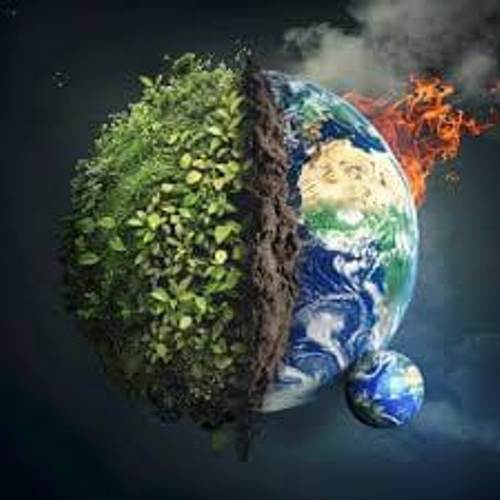
Climate change is no longer a future phenomenon discussed in the global summits or research studies alone. Climate change has now come into play as a phenomenon that affects us everyday in our lives. Increased temperatures, erratic rainfall patterns, recurring cyclones, devastating floods, prolonged droughts, and severe heatwaves reminding us that the climate on earth is changing at a very rapid rate.
These are not separate events but rather interrelated effects of human actions, which have caused an increase in the emissions of greenhouse gases during the last century.
Although India’s contribution to the global emissions of greenhouse gases has been much less than many of the developed nations, India is one of the countries that is most vulnerable to the adverse effects of climate change. Starting from the Himalayas to coastal regions of Odisha, Tamil Nadu and Gujarat, the effects of climate change are getting evident day by day. For instance, the farmers have an unpredictable monsoon, while the fisherman faces changed sea conditions, and even urban areas witness high temperatures and poor air quality.
Odisha provides a great example of both vulnerability and resilience. Situated on the shores of the Bay of Bengal, this region has been prone to severe cyclones like Fani, Phailin, Amphan, and Yaas.
Though Odisha has become world-renowned for its efficient disaster management system, the recurring pattern of severe weather conditions suggests that apart from adaptation, we have to tackle the source of the problem.
The most effective strategy to counter the phenomenon of climate change would be to switch from fossil fuel-based energy to renewable sources of energy as soon as possible. Solar, wind, hydropower, and biomass do not emit greenhouse gases at all. India has become one of the leading markets for renewable energy in the world, having set ambitious goals in terms of developing the sector and reducing emissions.
The National Solar Mission, PM Surya Ghar, and green hydrogen projects are just a few examples.
Nevertheless, the shift towards clean energy sources involves not only technological progress, but also awareness, responsible consumption, and policy measures. Everyone can make their contribution to this process.
Electricity conservation, use of public transportation, tree planting, waste minimization, and utilization of energy-efficient home appliances may seem insignificant, but in combination, all those steps make a big impact on reducing carbon emissions. Schools, industries, municipalities, and non-governmental organizations should cooperate in creating climate-friendly communities.
Another aspect of this issue which should be considered is climate justice. Most often, it is developing countries that are hit the hardest by the effects of climate change despite being less responsible for its origins.
Therefore, international cooperation, technology exchange, climate finance, and partnerships are crucial elements in achieving sustainable development.
The future of our planet will be determined by the decisions we make in the present. Development and sustainability are not contradictory terms; they have to grow together. Renewable energy, sustainable agriculture, green technologies, and proper use of resources are just some of the paths that will lead us toward development that does not harm anyone.
Climate change is not something that the government or scientists should solve. It is the duty of each of us. By choosing sustainable living, using renewable sources of energy, and protecting our natural resources, we can contribute to a better future of our children. There is no time left for discussions – it is time to take action.
Author: Smitapragyan Swain
Doctoral Researcher, Pursuing research on Critical Minerals
Dept. of Political Science and International Relations, Pandit Deendayal Energy University, Gandhinagar, Gujarat, INDIA