The Distinct Role of the Kandha Community in the Social Life of Kalahandi
By;- Siddharth Saswat Panda
Junagarh
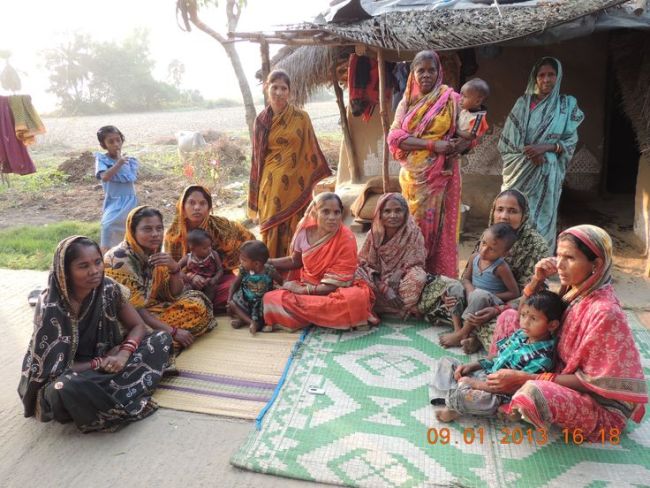
The Desia Kandhas primarily inhabit the plains and constitute a numerically dominant and influential section of the community. In contrast, the Kutia Kandhas reside in hilly valleys surrounded by mountains, which is why they are also referred to as “JharaniaKandhas.” Compared to the Desia Kandhas, the Kutia and DongriaKandhas are more conservative in their customs and way of life. Linguistically, while the Desia Kandhas use the Kandhan language, the Kutia and DongriaKandhas communicate in Kui and Kuvi languages respectively.
According to the folklore of the Kandha community, their ancestors migrated from the foothills of the Vindhya ranges and settled in Kalahandi. Hence, they identify themselves as “BaijnigiriKandhas.” As per these narratives, forests were cleared to establish settlements. Different clans cleared forest tracts and founded villages, which gradually expanded with population growth. Over time, clusters of villages formed administrative units known as “Desh” or “Pragana,” which functioned under a system of autonomous governance. The head of such units was known as the Patmajhi or Umra.
In the early stages, agriculture was practiced collectively through mutual cooperation. Though land distribution emerged in later periods, the spirit of collective participation and cooperation remained strong.
Legend further narrates that the last Ganga ruler of the Kaahandi region fell victim to a conspiracy, following which his son-in-law, Raghunath Sai, ascended the throne, marking the beginning of the Nagavanshi rule. The king’s death led to widespread public discontent.
The Kandhas, owing to their close relationship with the monarch, emerged as principal leaders of resistance.
This unrest gradually transformed into a rebellion, creating significant challenges in maintaining law and order.
During the reign of the sixth Nagavanshi king, Harishchandra Dev, the situation became uncontrollable, culminating in his death. His pregnant widow fled to her parental home in Gadapur.
However, the absence of a ruler led to increasing anarchy in Kalahandi. Eventually, the leaders of the Kandha community persuaded the queen to return, assuring her of safety and protection for the young prince. They escorted both mother and son back to the kingdom with dignity.
It is said that when the Kandhas went to bring the prince from Gadapur, his maternal grandfather invoked divine protection and sent along the family deity, Goddess Manikeshwari. Over time, she came to be worshipped as the presiding deity of the Nagavanshi rulers and the tutelary deity of the Kalahandi region.
From the perspective of social unity and numerical strength, the Desia Kandhas held a prominent position. In the medieval period (around the 11th century), Paramadi, the brother of the first Ganga ruler Choda Ganga Dev, governed regions including southern Odisha and parts of Kalahandi-Balangir. Subsequently, feudatory rulers representing the Ganga dynasty administered Kalahandi and neighboring areas. Given the demographic strength of the Kandhas, these rulers maintained cordial relations with Kandha leaders such as the Majhis and Umras and refrained from interfering in their autonomous socio-political systems.
Following the last feudatory ruler Jagannath Dev of this lineage, governance passed into the hands of the Nagavanshi rulers. Matrimonial alliances between the Nagavanshi kings and Kandha chiefs further strengthened this relationship. Notably, the seventh Nagavanshi king, Ramachandra Deo, married the daughter of a KandhaPatmajhi, and such alliances continued until the end of Nagavanshi rule in Kalahandi. Historians suggest that one such significant marriage ceremony was held at Jugasaipatna.
As a result of these implicit political arrangements, the rulers largely abstained from interfering in the Kandhas’ autonomous governance and religious practices, while assuming responsibility for their protection. However, a major transformation occurred in 1853 when Kalahandi transitioned from Maratha control to becoming a tributary state under the East India Company.
During the reign of Udit Pratap Deo, beginning in 1855, the revenue demand from villages witnessed a sharp increase—from ₹22,000 initially to ₹1,23,000 by 1881. Such a steep rise in taxation within a short period placed immense pressure on rural communities. The KandhaGauntias (village headmen), who were unaccustomed to systematic revenue collection, faced significant difficulties. Moreover, the imposition of land tax itself was a novel and burdensome concept for the Kandhas.
The newly introduced land settlement system gradually became detrimental to the indigenous population. In many instances, to retain ownership of their lands, tribal Gauntias borrowed money from outsiders. Unable to repay these debts, they eventually lost their holdings and were reduced to a state of dispossession.
This narrative clearly illustrates that the Kandha community played a pivotal role in shaping the socio-political fabric of Kalahandi. Their systems of self-governance, collective agricultural practices, and strong cultural identity significantly influenced the region’s historical trajectory.
Telephone – +91 9437700029 / +91 9438397029
Gmail – [email protected]
Top of Form
Bottom of Form