Land Lost, Life Lost: Tribal Youth’s Death Puts MCL in NCST Dock
Land Lost, Life Lost: Tribal Youth’s Death Puts MCL in NCST Dock
NCST summons MCL CMD, seeks action-taken report in 30 days
Debaranjan Samal
Associate editor,Odishabarta
Lakhnapur:A 25-year-old tribal youth’s death has triggered a storm over land acquisition practices in Odisha’s coal belt, forcing the National Commission for Scheduled Tribes (NCST) to step in and seek answers from Mahanadi Coalfields Limited (MCL).

Sujit Dishri of Ubuda village allegedly ended his life after years of running from pillar to post for compensation and employment following the acquisition of his ancestral land for coal mining. Family members allege that the land was taken without fair compensation, leaving the household economically crippled and mentally distressed.
Taking serious note of the incident, the NCST has issued a summons to the Chairman-cum-Managing Director of MCL, directing the PSU to submit a detailed action-taken report (ATR) within 30 days. The commission has warned that failure to provide a satisfactory explanation could invite personal appearance of senior officials.
According to the complaint, despite repeated representations, the affected family neither received monetary compensation nor rehabilitation benefits promised under displacement norms. The prolonged uncertainty and alleged administrative apathy are being cited as key factors that pushed the youth to take the extreme step.
The commission has invoked its powers under Article 338A of the Constitution, which grants it authority equivalent to a civil court while probing violations of tribal rights.
Sources said the NCST action followed a formal complaint by senior journalist Surendra Barik, highlighting systemic violations in land acquisition and rehabilitation processes in MCL-operated areas.
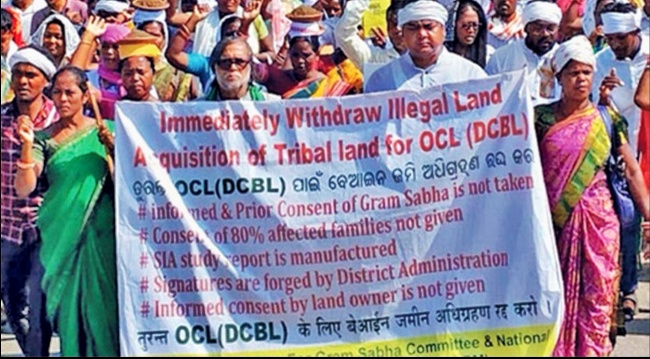
Coal mining-led displacement has long been a flashpoint in the region, but Sujit’s death has sharpened focus on the human cost of development projects. Activists argue that the case exposes a deeper failure of state agencies and public sector units to safeguard tribal livelihoods.
As protests simmer locally, the question now confronting the administration is stark: will accountability follow a life lost, or will the case fade into yet another statistic of displacement-driven despair(?).
For the villagers of Ubuda, the demand is simple but searing—the land is gone, the life is gone; justice must not be delayed.