
Supreme Court to Hear Presidential Reference on State Bills Amid Kerala, Tamil Nadu Objections
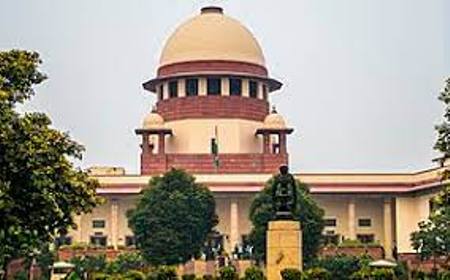
New Delhi: The Supreme Court on Tuesday agreed to examine a presidential reference challenging its April verdict that curtailed governors’ discretion over state bills. The move comes despite objections from the Kerala and Tamil Nadu governments, who argued against a fresh hearing on the matter.
A five-judge Constitution Bench led by Chief Justice DY Chandrachud, however, overruled the objections and directed both the Centre and the states to file their responses within a week. The matter is expected to be taken up for detailed hearing in August.
At the heart of the dispute is President Droupadi Murmu’s May letter to the apex court, issued under Article 143 of the Constitution, which empowers the President to seek the Supreme Court’s opinion.The letter raises 14 key questions, notably whether the judiciary can impose deadlines on the President or governors to assent to bills and whether courts can interfere in a governor’s exercise of constitutional discretion.
Tamil Nadu and Kerala, ruled by the DMK and the Left Democratic Front respectively, strongly opposed the reference. Senior advocates KK Venugopal and P Wilson, appearing for the two states, contended that revisiting the April verdict would directly impact legislation already cleared by the states, particularly the 10 Tamil Nadu bills that received assent after the court’s ruling.
Tamil Nadu Chief Minister MK Stalin sharply criticised the presidential reference, calling it a “desperate attempt to undermine democratically elected governments”. He accused the Centre of trying to reverse the judicial verdict, which had ruled Governor RN Ravi’s refusal to assent to bills passed twice by the Assembly as “arbitrary” and “illegal”.In response, Solicitor General Tushar Mehta, appearing for the Centre, dismissed the states’ protests with a controversial remark: “Repeated requests are only successful if a man is proposing to a girl.” His comment has triggered criticism on social media.
The April judgment had set a three-month deadline for governors and the president to take action on bills passed by state legislatures, following months of political friction in states like Tamil Nadu, Kerala, and Punjab, where governors were accused of withholding assent to key legislations.
During the earlier hearing, the court held that re-passed bills would be considered cleared from the date they were reintroduced, a finding now under scrutiny in the President’s reference.