Stakeholders’ Consultation on Just Transition in Odisha Lays Foundation for a People-Centric Climate Roadmap

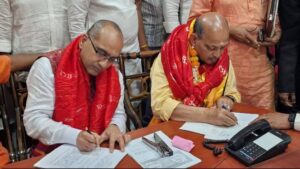
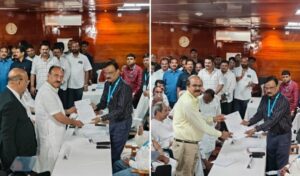
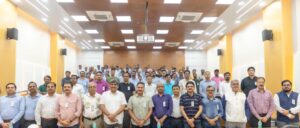
Bhubaneswar : A landmark Stakeholders’ Consultation on Just Transition in Odisha was held today at the Syndicate Hall of Utkal University. The event was jointly organised by Climate Action Network South Asia (CANSA), the Dept. of Geography and the Global Centre for Rural Studies (a Centre of Excellence under RUSA-II) in collaboration with the Vasudha Foundation. The day-long consultation brought together more than 80 participants from academia, government, civil society, research institutions, and community organisations to collectively deliberate on how Odisha can shape a just, inclusive, and environmentally sustainable transition in line with India’s net-zero goals.
The consultation aimed to examine the current trajectory of industrial development and green growth initiatives in Odisha, explore opportunities for Just Transition within the state’s clean energy and development agenda, and compile actionable insights that could inform India’s forthcoming Nationally Determined Contributions (NDC) 3.0 under the Paris Agreement. With India already having met its target of generating 50% of its installed electricity capacity from non-fossil sources ahead of the 2030 deadline, the challenge now lies in ensuring that this transformation does not come at the cost of equity, dignity, or justice—especially for the vulnerable and marginalised sections of society.
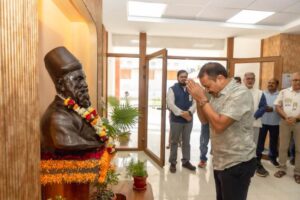
In his inaugural address, Prof. Jagneshwar Dandapat, Vice Chancellor of Utkal University, underscored the importance of environmental stewardship as a precondition for sustainable development. Prof. Kabir Mohan Sethy contextualised the significance of Just Transition in Odisha, a state whose mineral-rich economy and ecological vulnerability positions it uniquely within India’s green growth narrative. Dr. Siba Sankar Mohanty delivered the keynote address, stressing that any vision of a sustainable future must confront the deep-rooted structural inequalities of caste, class, gender, and region.
CANSA set the broader climate context, calling for decentralised and adaptive climate strategies that reflect local ecological and economic realities. Ms. Ruchi Chaudhary and Mr. Nakul Sharma presented detailed updates on India’s Nationally Determined Contributions and pointed to the urgent need for bottom-up approaches that integrate voices from climate-vulnerable regions like Odisha. Ms. Shivika Solanki of the Vasudha Foundation praised Odisha for its pioneering work on climate budgeting and identified specific opportunities where the state could lead the way in implementing net-zero strategies with a human face.
Heritage activist Anil Dhir, the Convener of Intach’s Bhubaneswar Chapter, made a passionate intervention on the growing apathy in governance structures toward environmental concerns. He warned that despite the increasing severity of climate-related disasters and environmental degradation, issues of ecological protection are repeatedly pushed to the margins while petty political rivalries and regional conflicts occupy the centre stage. His remarks served as a sharp and necessary reminder that without political will and civic pressure, the well-crafted transition plans risk being undermined by bureaucratic inertia and short-term interests.
A broad consensus emerged around the need to develop Odisha’s Just Transition framework as a model for the country—one that foregrounds climate justice, gender equity, and intergenerational responsibility. As India prepares to update its climate commitments, the insights emerging from this consultation offer both urgency and clarity: climate action must be just, inclusive, and rooted in the everyday experiences of the most impacted.