ODISHA POWERS INDIA’S INDUSTRIAL RISE. IT MUST NOW EMPOWER ITS OWN PEOPLE.
Odishabarta
Bhubaneswar. 15th,November,2026:The state contributes its minerals, land, water, infrastructure and human resources to the nation’s industrial growth. The real measure of this growth, however, must be the quality of jobs, careers and leadership opportunities it creates for the people of Odisha.
Odisha occupies a pivotal position in India’s industrial economy. Its iron ore, coal, bauxite and chromite feed the country’s steel, aluminium, power and manufacturing industries. Its land, water, electricity, roads, railways and ports provide the foundations on which major industrial investments are built.
But industrialisation also carries a cost. Communities surrender land, livelihoods undergo disruption, and the environment bears long-term pressures. The people of Odisha are not merely spectators to this transformation; they are among its principal contributors and stakeholders.
That raises a fundamental question: as Odisha powers India’s industrial growth, are its own people securing a proportionate share of the jobs, professional careers and leadership opportunities that this growth generates?
The answer cannot be found in investment announcements alone. It must be measured in the economic opportunities that reach ordinary people and in the extent to which local talent advances within the industries established on Odisha’s soil.
THE EMPLOYMENT PARADOX: RECORD INVESTMENTS, BUT WHAT KIND OF JOBS FOR ODIAS?
Odisha’s industrial economy is expanding. The industrial sector accounted for an estimated 41.3 per cent of the state’s Gross Value Added (GVA) in 2025–26, reflecting its growing economic significance.
In 2025, the state government approved 244 projects involving proposed investments of approximately ₹5.66 lakh crore, with an estimated employment potential of 3.35 lakh. Of these, 80 projects were reported to have been implemented, involving investments of around ₹1.75 lakh crore and approximately 1.4 lakh direct jobs.
These are significant numbers. But investment potential and actual employment are not the same. Nor does the headline number of jobs reveal who gets them, their quality or their long-term value.
How many of these jobs have gone to people domiciled in Odisha? How many are permanent positions and how many are contractual or outsourced? How many offer social security, structured training and opportunities for career progression?
Without these answers, employment figures alone cannot establish whether industrial growth is translating into broad-based economic empowerment.
LOCAL EMPLOYMENT IS NOT ENOUGH: WHERE ARE ODIAS IN THE SKILL AND MANAGEMENT HIERARCHY(?).
The employment profile of Odisha’s industrial sector needs closer examination. The number of people engaged in an industry is only one part of the picture. Their domicile, nature of employment, skill levels and positions in the organisational hierarchy matter equally.
According to estimates in the Odisha Economic Survey 2025–26, around 59 lakh people were engaged in the broad industrial sector in 2023–24. This includes construction, manufacturing, mining, electricity and utilities. It should not, however, be interpreted as the number of permanent factory employees.
Manufacturing alone accounted for an estimated 16.9 lakh workers, of whom approximately 3.7 lakh were in the organised sector and 13.2 lakh in the unorganised sector. The organised and unorganised segments also differ substantially in their scale of production and economic contribution.
In 2019, the then Labour Minister had informed the Odisha Assembly that 85 per cent of employees in 550 industrial units were local. While this was an encouraging claim, there is a continuing need for updated, independently verifiable and sector-wise data.
More importantly, the term ‘local employment’ needs greater clarity. Does it include contractual workers? Does it cover only entry-level positions, or also technical, supervisory and managerial roles? Are Odisha-domiciled employees progressing to senior positions(?).
Industries must be free to recruit talent from across India. A modern industrial economy benefits from professional mobility, outside expertise and the exchange of skills. The issue is not where an employee comes from.
The issue is whether local youth have fair access to training, recruitment and advancement.
Odisha must aspire not merely to be a destination for industrial employment, but a source of skilled professionals and future industrial leaders.
A PAYCHEQUE IS NOT A CAREER: THE MISSING LADDER OF ADVANCEMENT
The presence of thousands of local workers in a factory does not, by itself, establish the quality of employment.
The more important question is whether young people from Odisha remain concentrated in entry-level jobs—as workers, operators and support staff—or progress to become engineers, technical specialists, supervisors, managers and senior decision-makers.
A good job must offer more than a monthly wage. It should provide reasonable employment security, social security cover, opportunities for skill development, fair remuneration and a credible path to career progression.
If an Odia employee spends years in a contractual position without access to higher training, promotion or a permanent career path, the promise of industrial empowerment remains incomplete.
The state’s education and skilling institutions must align their programmes with emerging industrial requirements. Equally, companies must invest in developing local talent rather than treating recruitment as a one-time transaction.
The objective should be clear: an Odia youth entering an industrial establishment should be able to aspire not only to a job, but also to a professional career and, ultimately, a leadership position.
WHEN INDUSTRIES RETRENCH OR CLOSE, WHO BEARS THE COST(?).
The employment record of industrialisation cannot be assessed only by counting new jobs. It must also account for retrenchment, contractual job losses, closure of industrial units and reductions in production.
How many workers have lost their jobs in Odisha’s industrial sector over the past five years? How many were from Odisha and how many from other states? What proportion were permanent employees and what proportion were contractual workers(?).
A comprehensive, state-wide database that answers these questions by domicile and employment category is not readily available. This information gap is itself a policy concern.
If investment commitments and employment creation are reported publicly, job losses, retrenchment and rehabilitation should receive similar transparency.
Industrial development must be judged not only by the jobs it creates, but also by how responsibly it protects workers when businesses restructure or shut down.
FROM HOSTING INDUSTRIES TO PRODUCING INDUSTRIAL LEADERS: ODISHA MUST RAISE ITS AMBITION
Odisha’s industrial policy must go beyond attracting larger investments. It must also focus on building a strong local talent pipeline capable of meeting the needs of modern industry.
This requires closer collaboration between government, industry, universities, technical institutions and skill-development agencies. Training programmes should be linked to actual industry requirements, while companies should create measurable pathways for local employees to move into technical, supervisory and managerial positions.
The government can take the lead by making employment outcomes more transparent. Major industrial establishments should periodically disclose their workforce profile, including:
– The proportion of Odisha-domiciled employees.
– The distribution between permanent, contractual and outsourced employment.
– Local representation in technical, supervisory and managerial positions.
– Training, promotion and career-progression opportunities.
– Retrenchment, job losses and rehabilitation outcomes.
An independent assessment of the state’s 100 leading industrial establishments ( includes the Top invrstors like Tata Steel, Jindal Steel, JSW, HINDALCO / Aditya Birla, MCL, NALCO, ADANI, Paradip Port, AMNS etc ) could be a practical starting point. The purpose would not be to penalise industry or discourage investment, but to establish a credible picture of how industrial growth is contributing to local human-capital development.
Such transparency would strengthen public confidence, encourage responsible corporate practices and make industrialisation more inclusive.
THE ULTIMATE TEST OF INDUSTRIALISATION: WILL ODIA PEOPLE SHARE IN THE WEALTH, OPPORTUNITY AND LEADERSHIP IT CREATES(?).
Odisha needs industrial growth. It needs investment, technology, entrepreneurship, productivity and globally competitive enterprises. It must welcome talent and expertise from across the country and the world.
But the success of industrialisation cannot be measured merely by the volume of investment attracted, the number of factories established or the value of output produced. Its real worth must also be reflected in the economic mobility and professional advancement of the people of Odisha.
The state must not remain merely a supplier of raw materials or a destination for capital. It must become a source of skilled professionals, technocrats, entrepreneurs, business leaders and corporate decision-makers.
The benefits of industrialisation should be visible not only in company balance sheets, expanding production capacities and rising shareholder value, but also in the careers, incomes and leadership positions of the people whose land, resources and social environment make that industrial growth possible.
This is not a demand for preferential treatment. It is a call for a fairer and more sustainable model of development—one in which industrial success and local economic advancement reinforce each other.
The fundamental question to industry is therefore not simply how much Odisha can contribute to your long-term growth and shareholder returns. It is how much you are prepared to contribute to the long-term economic future of Odisha’s people.
The true measure of an industrialised Odisha will not be how tall its factories rise, but how far its Youth rise with them.
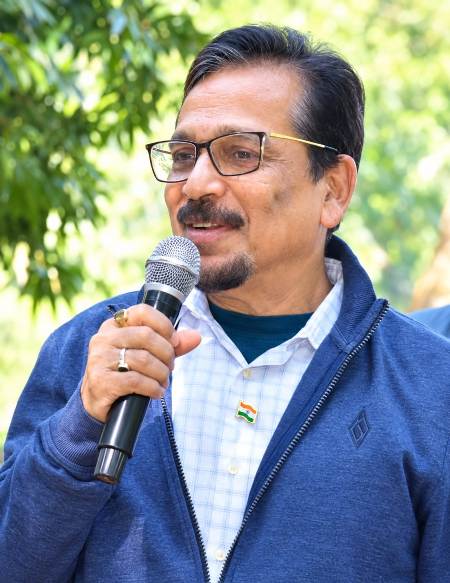
By – Prashant Hota,MA, MBA, PHD (Hon)
Chairman, Inclusion Foundation ,
Mob : 9777443999
(A senior leader in sustainable development & Communication with 40+ years in Metal & Mining Industries & NABARD).