
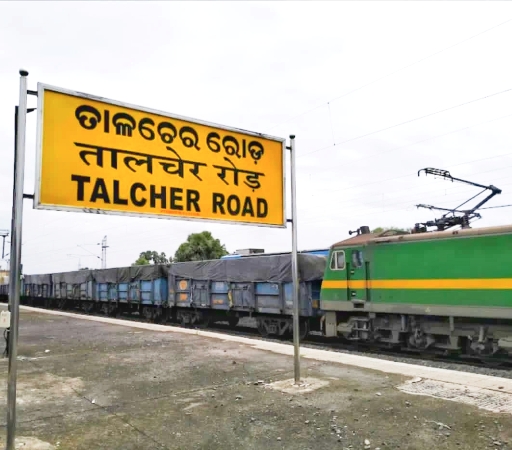
Odisha HC Flags article 21 Concerns Over Unsafe Access to Talcher Road Railway Station.
Debaranjan Samal.
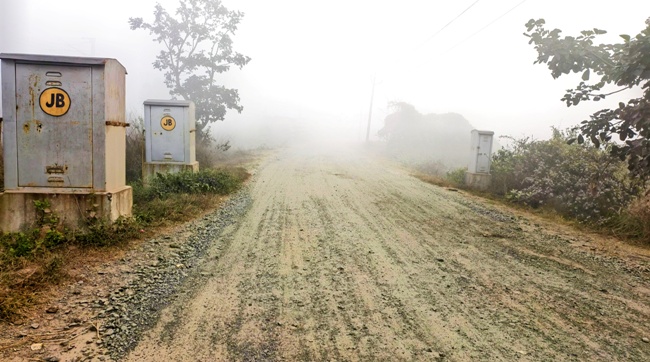
Cuttack,(25/12/25):In a matter raising serious constitutional questions on passenger safety and State accountability, the High Court of Odisha has taken cognisance of a Public Interest Litigation (PIL) alleging prolonged neglect of the approach road to Talcher Road Railway Station, invoking the Right to Life under Article 21 of the Constitution.
As per the official order dated 23 December 2025 in W.P.(C) (PIL) No. 22433 of 2025, a Constitution Bench comprising Chief Justice Harish Tandon and Justice Murahari Sri Raman listed the matter for further hearing on 13 January 2026, granting time to the Union of India and railway authorities to obtain instructions and respond.
The PIL was filed by RTI activist Deba Prasad Sahoo of Talcher, who alleged that despite repeated written representations over the past year, the Railways failed to reconstruct the severely damaged approach road or install street lighting, exposing thousands of daily passengers to accident risks and security threats—particularly during night hours.
The petition contends that safe access to a public transport facility is an inseparable component of Article 21, which guarantees not merely the right to existence but the right to live with dignity, safety, and reasonable infrastructure. The continued administrative inaction, it argues, amounts to a constitutional failure of public duty.
The matter is being argued by Supreme Court advocate Gyanadutta Chauhan, while the Union of India is represented by Central Government Counsel S.K. Samantaray. The High Court has allowed time for the Railways to place their stand on record.
Legal experts note that the case reflects a broader national issue—the gap between large-scale infrastructure announcements and ground-level neglect of basic passenger safety, particularly in Tier-II and industrial towns. Courts across the country have repeatedly held that infrastructural negligence affecting public safety falls squarely within the ambit of Article 21.
The outcome of the case is expected to have wider implications for how railway authorities discharge their constitutional obligations toward passenger safety and last-mile access across India.