Mahendragiri: The Forgotten Sentinel of Eastern India’s Sacred Past

Among the towering ridges of the Eastern Ghats, 1501m above from sea level ,Mahendragiri stands not merely as a peak of stone and soil, but as a living monument of Odisha’s sacred geography, literary consciousness, and dynastic memory. its slopes have been home to sages, chroniclers, dynasties, and deities. This mountain has watched civilizations rise, inscriptions etched, and verses composed in its honour for over three thousand years. Despite its unparalleled importance in Puranic lore, ancient epigraphy, classical odia literature, and biodiversity, Mahendragiri remains an unsung sentinel of Kalinga’s past. This mountain range, sprawling across present-day Gajapati district of Odisha.
Puranic Echoes
As the classical verse encapsulates the cultural authority of Puranas:
“Itihāsa Purāṇābhyām Vedaṃ Samupabṛṃhayet,
Bibhetya Alpaśrutād Vedaḥ Māmayam Prahariṣyati.”
(means-Let the Veda be interpreted through Itihāsa and Purāṇa, else it fears it may be misrepresented by the unlearned.)
From the age of the Vedas to the present, Mahendragiri has been reverently acknowledged. It is not merely a backdrop in scriptures—it is a sacred protagonist. Countless Puranas sing its praises: the Ramayana, Adhyatma Ramayana, Mahabharata, Brahma Vaivarta Purana, Hemachudamani Upakhyana, Brahma Purana, Padma Purana, Skanda, Varaha, Vamana, Kurma, Srimad Bhagavata, Vishnu, Linga, Agni, Bhavishya, and even the Kalki Purana mention it with reverence.
The sanskrit Valmiki Ramayana reverently states:
“Satwam dharma paro bhutwa kāśyapāy vasundharām,
Datwāban mupāgamya Mahendra kṛtaketanaḥ.”
The Vishnu Purana mentions:
“Mahendro Malayaḥ Sahyaḥ Śuktimān Ṛukṣa Parvataḥ
Vindhyāśca Pārijātraśca Sapta Kulaparvataḥ”
(These are the seven sacred mountain ranges—Saptakulachala—including Mahendra.)
In Odia tradition, too, Mahendragiri finds glorious mention in Sarala Mahabharata, Krushna Singha Mahabharata, Dandi Ramayana, namaratna Gita, Haribasha, Garuda Purana, pitambara dasa Nrusimha Purana and more.
Sarala Dasa in Mahabharata maps his birth region by indicating mahendra as landmark:
“Jambudwīpe Bhārata-khaṇḍe Mandala Odra-rāṣṭra,Bhubana Jajanāgra pūrva dige Mahodadhi tata.
Śwetabāhī Nīlasundara giri madhya sthāne,
Mahendra Candrahāga Konāraka aiśyāne.’’
As per Adhyatma Ramayana, Lord Parashurama meditated here- “Ramanku pradakṣiṇa kale
Mahendra parvata ku gale”
Across regional literatures like Krittivasa Ramayana (Bengali), Kamba Ramayanam (Tamil), Tulsidas’ Ramcharitmanas (awadhi), and Telugu Mahabharatamu and bhargava Ramayanamu—the name “Mahendra” resonates as a site of penance and power.
Historical Riches
Mahendragiri was the mountain fortress of ancient Kalinga. Dr. Bharat Panda associates the Buddheswara and Indralinga shrines on the hill with the Ashokan period (c. 260 BCE), linking it to the Jaugada rock edicts. The Nasik inscription of Satakarni mentions Mahendra, indicating its strategic value. King Kharavela of Kalinga, a descendant of the Mahameghavahana line, reclaimed it by defeating Satakarni and reoccupied the kula parvata. A 3rd-century CE Buddhist text Data Dhatu Vamsa mentions “Guha Shiva,” a Murunda king of Kalinga during the decline of the Mahameghavahanas. The Prayaga Prashasti of Samudragupta (4th century CE) confirms his southern march reaching Mahendragiri through the Mahakantara forests and Kalinga ghats, subduing local rulers like Swamidatta and Damanas of Erandapalli and Giri Kottura .
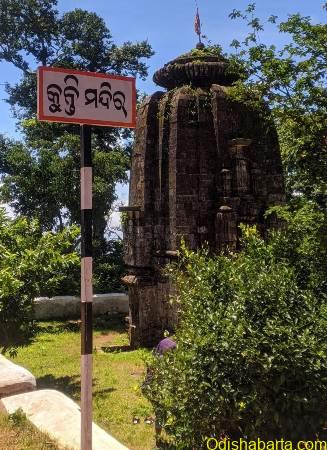
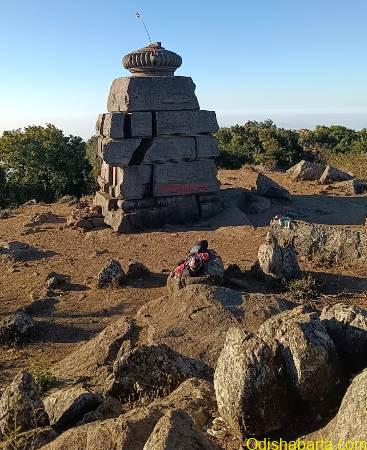
From the mid-4th to 6th centuries CE, the Mathara dynasty, also known as the Pitṛbhakta kings, ruled from Mahendragiri, calling themselves “Kalingadhipati.” Kings such as Uma Varma and Nanda prabhanjana Varma used the title Parama Bhattaraka. The region was then known as Mahendra Viṣaya—a central province. The Bhima Temple, a striking stone structure on the hilltop, is widely believed to have originated during this time. The Kharsanda copper plate of King Vishakhavarma confirms Mahendragiri as their stronghold, with the capital near present-day Bati-Siripur.The Matharas promoted both Śaivism and Vaiṣṇavism, as evident from sites like Parikota Tarjani Hanuman and Kuntimandira Vishnu.. The Kama-Nalinakshyapura copper plate of Samanta Varma references the road as “Dharma
Raja Kalinga Mārga”—the sacred artery to Mahendra. This pluralistic devotion continued into later dynasties—the Durjjayas, the Chandra-Samantās, and the Mandasor inscription-linked rule of Yashodharman (532–33 CE) whose dominion stretched from Brahmaputra to Mahendra..
The earily estern Ganga dynasty of swetaka line and Kalinga Kadamba feudatories ruled Mahendra, appointing generals with the title Mahendradhipati Mahāmandaleśwara. Later, Shailodbhava kings, originating by legend from the mountain itself, believed to built temples like the Judhisthira deula. Even the mighty Pulakeshin II and Rajendra Chola I marked their dominion here. from the Cholas. Rajendra Chola (1015–1022 CE) had briefly occupied it by defeating his brother-in-law Vimāladitya who was controlling the region for time being. But with rulers like Kāmarṇava Deva, Vajrahasta Deva, and Rājarāja Deva of the Kalinganagara branch, the Gangas consolidated power.
The Eastern Ganga dynasty marked a cultural renaissance of Kalinga. From 6th century onwards, Śvetaka Gangas made Mahendragiri their sacred abode.
They venerated Lord Gokarneswara, the presiding deity, as noted in numerous copper plate grants. King Devendravarma’s inscription vividly states:
“Mahendrachal
a-mālā-kanaka-śikhara-pratiṣṭhitasya,
sacara-acara-gurotsukalasya bhagavato Gokarṇa-swāminaḥ…”
(“The golden-spired Mahendra hill hosts Gokarneswara, the universal lord and architect of creation.”)
During the imperial period Anantavarman Chodaganga Deva, of the Eastern Gangas reasserted Mahendragiri’s importance, as seen in the Kuntimandira inscriptions (1123–1133 CE). Records speak of Bhimanata, a Karana, and Laksmidharacharya, a Brahmin, donating lamps to Gokarneswara during his reign. Chodaganga’s dominion extended from the Ganga to the Godavari, and Mahendragiri remained at the center of this resurgence.Later, King Bhanudeva III left a mark in early Odia language through his 1376 CE inscription at Pottangi’s Potteswara Temple at Mahendragiri’s foothill—one of the oldest Odia inscriptions recorded. In the post-medival period, the Rajamani odia royal family of Manjusha (nowMandasa) preserved and reinstalled ancient icons of Varaha, Narasimha, and Buddha on the hill, continuing a legacy of cultural conservation.
Architectural importance
Mahendragiri is home to some of the oldest surviving temples in India, representing the earliest stages of Kalingan temple architecture. It is here that the foundational forms of the Rekha Deula and Pidha Deula styles began to evolve, long before they reached their full expression in later periods. The region is dotted with numerous prehistoric and early historic
sites, many of which n unexplored and undocumented. Among them, the Bhima Deula, built in mathara period stands out as the oldest surviving temple structure in Odisha—predating even the renowned Satrughneswara temple of Bhubaneswar. What makes Mahendragiri’s architecture particularly fascinating is the primitive but ingenious construction technique visible in these temples: many are built by placing stone blocks over one another without the use of mortar or any binding material. This dry masonry approach, seen even in the Bhima temple, gives us valuable insight into the earliest temple-building traditions of eastern India. The presence of miniature shrine models scattered across the site further enriches its archaeological value, making Mahendragiri a crucial location for scholars and archaeologists interested in Odisha’s architectural and religious heritage.
remain
Mahendragiri in Odia Literary Memory and jagannatha cult-
Mahendragiri has historically flourished as a confluence of diverse spiritual traditions—including Śākta, Śaiva, Vaiṣṇava, Hanumatta sādhana, Bauddha bhāvana, Sahajayāna practices, and Tantra. It is considered one of the earliest pīṭhas of Dāru Brahma Śrī Purusottama. Eminent scholars like Padma Shri Satyanarayan Rajaguru and Dr. Beni Madhava Padhi have emphasized its deep connection with the Sābara tradition and the evolution of the Jagannātha cult of mahendra ‘s bhatra sahi. In ancient Odia Buddhist literature, particularly the Chāryā Sāhitya, Mahendragiri finds mention through the works of Boddha Gaṇa poets. In early Odia folk songs such as Raila, the mountain’s extended terrain is portrayed as a site of profound tantric practices. One striking verse reveals:
“Bagha balada mu bandhili hale,
tasa kali mu Maindira male ti,
Raila j, tasa kali Maindira male,”
—meaning, “I yoked a tiger and a bullock to the plough and cultivated the slopes of Mahendra.” Here, Raila poetically expresses mystical cultivation through spiritual tantric paradox. In the later Rīti Yuga, this Raila brutta evolved as a distinct metrical pattern in classical Odissi music, notably employed by poets like Gopālakṛṣṇa. This continuity affirms Mahendragiri’s central role not only in spiritual but also in literary and musical traditions of Odisha
.
Also Modern Odia poets immortalised Mahendragiri in their verses.
Mahendragiri’s poetic beauty captured the imagination of Radhanath Ray composed the Mahendra Kavya, in which he describes the mountain as the jewel among hills, a blue sapphire glowing amidst green forests. Godabarisha Mishra, Gopabandhu Das, and Gangadhar Meher all wrote of Mahendra’s grandeur, associating it with divine serenity and historical pride. Their verses reflect how Mahendragiri became not just a site of myth, but also of memory and belonging.
Godāvariśa Miśra wrote:
“Utkala maṇḍale Mahendra parvata Sakala parbatu baḍa E pākhe rahichhi Pāralā rāija Se pākhe Mañjuṣā gaḍa”
Rādhānātha Rāya, in Mahendra Kābya, called it:
“Utkala Lakṣmī ra priya aṭṭālikā Viśvāloake Indra nīla vila bhikā E Gaṅjāma mahī mañju śatadala Keśara tahiṁ e Mahendra añcala”
Gopabandhu Dāsa, in Bandī ra Svadeśa Cintā, dreamt of its flora:
“Kari thiba bheṭa Mañjuṣā mukuta Mahendra śaila subāsa phula Tava samāgama nācithiba preme Dohalāi taru bhūja saṅkula”
Kabisekhar Cintāmaṇi Mahānti wrote:
“Lokaloka giri śobha dharilā Mahendra Huanta sārthaka Hāra Pārvatī upamā”
Gaṅgādhara Meher visualised Mahendra as divine throne:
“Mana prabhābaru ucca ucca giri śreṇīre pāile sthāna Ghana śirasthaka Mahendra aila Mantra he’i samādruta”
gible and intangible heritage, Mahendragiri struggles against neglect. Its ecosystem is fragile, rich in rare flora and fauna, and must be preserved from encroachments, plastic pollution, and insensitive tourism. Better railway connectivity with parala, inclusion in the Ramayana Circuit, and eco-sensitive development,like a ropeway to the Bhima temple—are necessary.This hill, where gods meditated, kings ruled, and poets dreamed, must rise again in public memory—not only as a peak of stone, but as a symbol of Kalinga’s eternal soul.
Bishnu Mohan Adhikari
9439299805
Paralakhemundi