Boost to tribal education: 173 newly appointed teachers receive letters in Rayagada
Dr.Badal Tah,Odishabarta
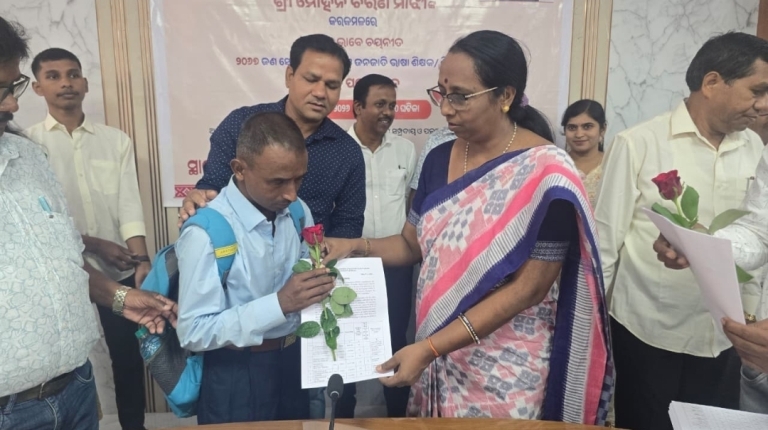
Rayagada, November 1: In a major push to strengthen grassroots education and empower students from marginalized communities, 173 candidates were handed appointment letters under the Scheduled Tribes and Other Backward Classes Welfare Department in Rayagada district.
The newly recruited batch comprises 147 Sevaks/Sevikas (primary educators) and 26 language teachers.
The appointments were formalized through a synchronized state and district-level ceremony.
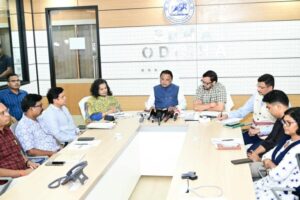
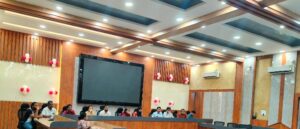
At the central event held in Bhubaneswar, Chief Minister Mohan Charan Majhi personally handed appointment orders to 70 recruits from Rayagada. Concurrently, Rayagada District Collector Ashutosh Kulkarni distributed letters to the remaining 103 candidates at the Collectorate’s new conference hall, while attendees connected to the state-level proceedings via video conference to hear the Chief Minister’s address.
Addressing the inductees, Collector Kulkarni underlined that teaching is far more than a regular vocation—it is a vital instrument for social transformation. He urged the teachers to recognize their unique responsibility as mentors to first-generation learners in remote tribal belts, where education remains the most potent tool to lift communities out of poverty.
Kulkarni also highlighted that pervasive social challenges—including malnutrition, alcoholism, lack of hygiene, and superstition—can only be tackled by transforming attitudes early in life. Emphasizing that children’s minds are the most receptive to positive change, he called upon educators to look beyond standard textbooks to instill moral values, critical reasoning, and self-confidence.
The ceremony was coordinated by District Welfare Officer Asima Rao. The Assistant Collector, District Education Officer, Welfare Extension Officers, and departmental staff were present. With these recruitments, welfare-run schools across the district are set to address teacher shortages, providing indigenous students with a stronger, linguistically inclusive learning foundation.