Meet Speedy Swamy: Road Safety Network Uses AI to Challenge What India Thinks It Knows About Safe Speed
Desk,Odishabarta
An AI-powered speed limit board takes centre stage in a film that turns a technical road safety issue into an engaging, everyday conversation
With 1.83 lakh road deaths recorded in India in 2025, the film explores why safe speeds depend on road conditions and the people using them
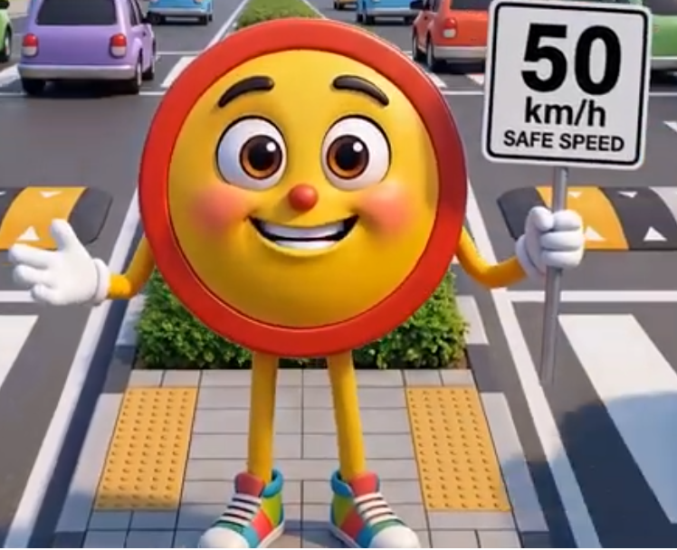
India, 15th October 2026: A speed limit sign may display a number, but does that number tell the whole story? What is safe on an open highway may be dangerous on a busy street shared with pedestrians, cyclists and two-wheeler riders. Ahead of the World Trauma Day on 17 October, the Road Safety Network (RSN) has unveiled “What Speed Is Actually Safe? | Speedy Swamy Explains”, an AI-led film that explores this question by giving a familiar road fixture an unexpected role: that of a storyteller.
The film features “Speedy Swamy”, an AI-based speed limit board character who uses relatable road scenarios to explain why safe speed is about more than following a number on a sign. Through the character, the film illustrates how road design, surrounding activity, the presence of vulnerable road users and the human body’s ability to withstand impact influence what constitutes a safe speed.
The film comes against a sobering national backdrop. India recorded 5,13,563 road accidents and 1,83,382 fatalities in 2025, according to figures shared by the Ministry of Road Transport and Highways. Speeding accounted for 82,124 road accidents, around 16% of the national total. These figures bring into focus the relationship between speed, road environments and the risk of serious crashes.
At the heart of the film is a simple creative idea: give a familiar object a voice to challenge a familiar assumption. Speedy Swamy transforms a road sign from a passive indicator into a character that explains why the same speed can carry very different risks in different settings. A residential street, a school zone and a highway each present different conditions, requiring speeds that reflect the surrounding environment and the safety of those using the road.
The film also highlights the consequences of impact speed for pedestrians and other vulnerable road users. According to the World Health Organization (WHO), every 1% increase in mean traffic speed is associated with a 4% increase in fatal crash risk and a 3% increase in serious crash risk. This highlights the importance of context-based speed management, alongside safer road design, visible pedestrian crossings and traffic-calming measures.
The film’s release coincides with World Trauma Day, which underscores the importance of preventing traumatic injuries and improving outcomes for those affected. In the context of road safety, this highlights the need to prevent crashes and reduce the severity of injuries through appropriate speed management. The film reinforces that speed cannot be considered in isolation; the road, its surroundings and the people using it all play a critical role in determining what is safe.
The film follows RSN’s earlier AI-driven initiative, “Sahi Seat, Surakshit Safar”, developed in collaboration with the Ministry of Road Transport and Highways to highlight the importance of child restraint systems for children travelling in cars. The new film takes this storytelling approach to another everyday road safety issue: understanding what makes a speed safe.