‘Tree Man’ of Jajpur Srinibas Jena honoured with honorary doctorate for environmental work
Akshya Rout, Odishaarta
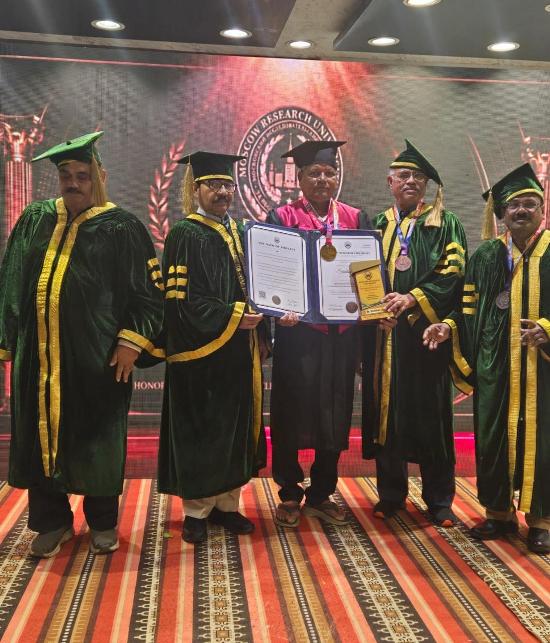
JAJPUR: Srinibas Jena of Kanpur village under Dharmasala block in Jajpur district has been conferred an honorary doctorate in recognition of his work in environmental conservation, afforestation and social activism.
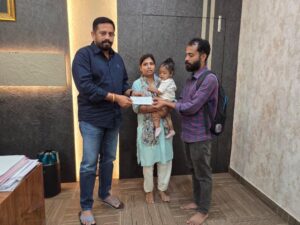
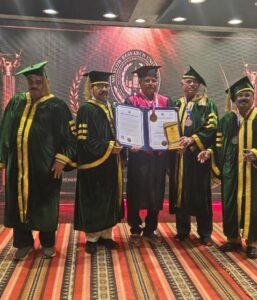
The honour was presented to Mr. Jena at a ceremony held at Sandy Tower in Bhubaneswar. According to the certificate issued to him, the Office of the Executive Evaluation Board of Moscow Research University conferred on him the honorary title of Doctor of Philosophy (Ph.D.) in Environmental Conservation & Social Activism (Honoris Causa).
The certificate recognised Mr. Jena’s grassroots initiatives in afforestation and environmental conservation and described him as the “Tree Man of Odisha”. It also acknowledged his efforts to promote environmental awareness and encourage community participation in activities aimed at protecting and nurturing trees.
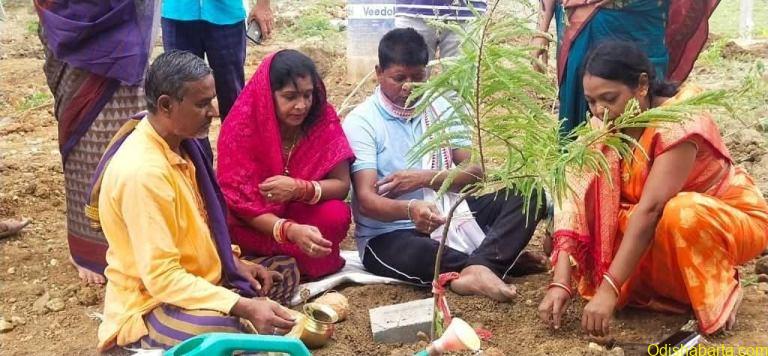
For Mr. Jena, the recognition is closely linked to a sustained campaign to make people aware of the importance of trees and the need to protect the natural environment. For several years, he has been involved in tree plantation, conservation and environmental awareness programmes in and around his locality. His activities have extended beyond planting saplings, with an emphasis on encouraging communities to protect trees and ensure their survival.
Speaking on the occasion, Mr. Jena said the recognition would strengthen his resolve to continue working for environmental protection, afforestation and public awareness. He said environmental conservation could not be left to governments and organisations alone and required active participation from communities, educational institutions, social groups and individuals.
Known locally as the “Tree Man”, Mr. Jena has been using his grassroots activities to spread the message that protecting trees is directly linked to protecting human life and the future of the planet. His appeal is particularly focused on encouraging people to understand the long-term value of trees rather than viewing plantation merely as a ceremonial activity.
“Trees give us life directly and indirectly. They produce oxygen, absorb carbon dioxide and contribute to rainfall and ecological balance. They are among the most precious gifts of nature to humanity. We must understand their importance, respect them and preserve them for the well-being of future generations,” Mr. Jena said.
He said trees should be regarded as “green gold” because of the enormous ecological, social and economic value they provide. Apart from maintaining ecological balance, trees provide fruits, medicinal resources, spices, vegetables, timber, fuel, fodder and shade. They also provide habitats for birds, insects and other wildlife and contribute to maintaining biodiversity.
Mr. Jena emphasised that the benefits of trees extend far beyond what can be measured in economic terms.
They help moderate temperatures, improve air quality, conserve soil and water and provide shelter and food for numerous species. Forests and trees also play an important role in absorbing carbon dioxide and mitigating the impact of climate change.
“Saving trees means saving life and protecting the environment. We should make every effort to save existing trees while planting more trees wherever possible. The objective should be to create a greener and healthier earth for future generations,” he said.
He also stressed the importance of ensuring that newly planted saplings were properly cared for. According to him, planting a sapling is only the beginning of the conservation process. Regular watering, protection from damage and community involvement are essential for ensuring that saplings grow into mature trees.
Environmental activists have repeatedly stressed that afforestation and conservation require long-term community participation. Mr. Jena’s work has similarly sought to involve ordinary people in environmental initiatives by encouraging them to take responsibility for trees in their neighbourhoods and villages.
His message also comes at a time when increasing urbanisation, infrastructure development, pollution and the loss of green cover have emerged as major environmental concerns. While development remains important, environmental protection and sustainable use of natural resources are increasingly being emphasised as essential components of responsible development.
Mr. Jena believes that awareness among children and young people can play an important role in creating a culture of environmental responsibility. He has urged schools, colleges, youth organisations and community groups to organise plantation and awareness programmes and to encourage students to develop a personal bond with nature.
He said every individual could contribute to environmental protection through simple measures such as planting trees, protecting existing trees, reducing unnecessary cutting, conserving water and avoiding practices that damage the environment.
“Trees are valuable for our health as well as for our collective well-being. They give us oxygen and shade, support wildlife, help maintain water and soil resources and make our surroundings healthier. Protecting trees is therefore not merely an environmental responsibility but a responsibility towards humanity,” he said.
The honorary doctorate has brought wider recognition to Mr. Jena’s grassroots environmental activities. However, he said the honour should be viewed not as an endpoint but as an encouragement to continue the campaign for afforestation and environmental awareness.
He appealed to people across Odisha to make tree protection a part of their daily lives and to work collectively towards increasing green cover.
“Let us plant trees, protect the trees that already exist and inspire others to do the same. If we protect trees today, we protect life tomorrow. A greener earth is a healthier earth, and creating such an earth is a shared responsibility,” Mr. Jena said.
The recognition of the Dharmasala environmental activist has also drawn attention to the contribution that grassroots workers can make to conservation. While large-scale afforestation programmes require institutional support, sustained local participation can help ensure that environmental awareness reaches villages and communities.
For the “Tree Man of Odisha”, the message remains simple: trees are not merely part of the landscape but a fundamental support system for life. Protecting them, he believes, is one of the most important investments society can make in its own future.