
Stray Dog Attacks Raise Public Safety Concerns in Ganjam; Humane Long-Term Solution Urged
News Desk, Odishabarta
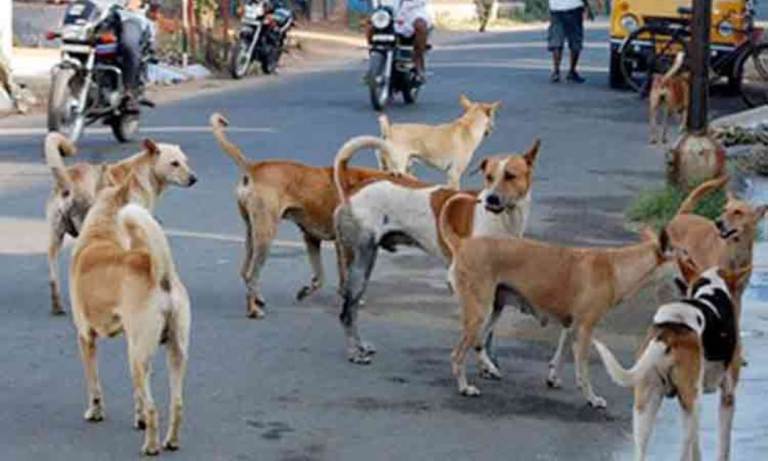
BERHAMPUR, July 9: Repeated incidents of stray dog attacks on children, elderly persons and women in both urban and rural areas have once again raised serious concerns over public safety across Ganjam district.
The latest incident, in which a six-year-old child was injured after being attacked by a stray dog in Mahanal village, has intensified demands for a scientific and long-term strategy to manage the growing stray dog population.
The latest attack comes just days after another child from the same village was similarly injured by a stray dog. Residents say the problem is no longer confined to a single village, with reports of dog attacks emerging from several blocks and Notified Area Councils (NACs) across the district. The recurring incidents highlight the urgent need for a comprehensive and well-planned intervention.
Experts and animal welfare advocates maintain that merely providing medical treatment to victims after each attack is not a lasting solution. Instead, they recommend a scientific, humane and sustainable approach to stray dog population management. Globally, the Animal Birth Control (ABC) programme, combined with systematic anti-rabies vaccination, is recognised as the most effective and humane method for controlling stray dog populations while reducing the risk of rabies.
The successful implementation of the Animal Birth Control programme by the Berhampur Municipal Corporation has often been cited as a model. However, the facility remains largely limited to urban areas, while rural regions continue to witness a steady increase in stray dog numbers due to the absence of organised sterilisation and anti-rabies vaccination programmes.
Consequently, children, senior citizens and women remain particularly vulnerable to dog attacks.
Animal welfare activist Lalatendu Choudhury has urged the State Government and the Ganjam district administration to replicate the Berhampur model by establishing dedicated Animal Birth Control and anti-rabies vaccination centres in every block of the district. Notably, such an initiative would not only promote animal welfare but also significantly improve public safety, reduce the incidence of rabies and ensure effective long-term management of the stray dog population. appealed to the authorities to act before more people—especially children—fall victim to stray dog attacks.
He suggested to the Govt. that every block should have a dedicated budget, trained personnel, veterinary doctors and the necessary infrastructure for the effective implementation of the ABC programme.
Adding one vital point He stressed the need for sustained public awareness campaigns involving gram panchayats, local communities and voluntary organisations to encourage community participation in responsible stray dog management.
“The stray dog issue should be addressed through scientific, humane and evidence-based policies rather than emotional reactions,” Choudhury said. “A comprehensive Animal Birth Control programme, supported by anti-rabies vaccination and public awareness, can create a safer environment for both people and animals while ensuring peaceful coexistence between humans and stray dogs.”
Residents and animal welfare activists have urged the government to take immediate policy-level action before the situation escalates further, warning that delayed intervention could lead to more avoidable injuries and an increased public health risk.